


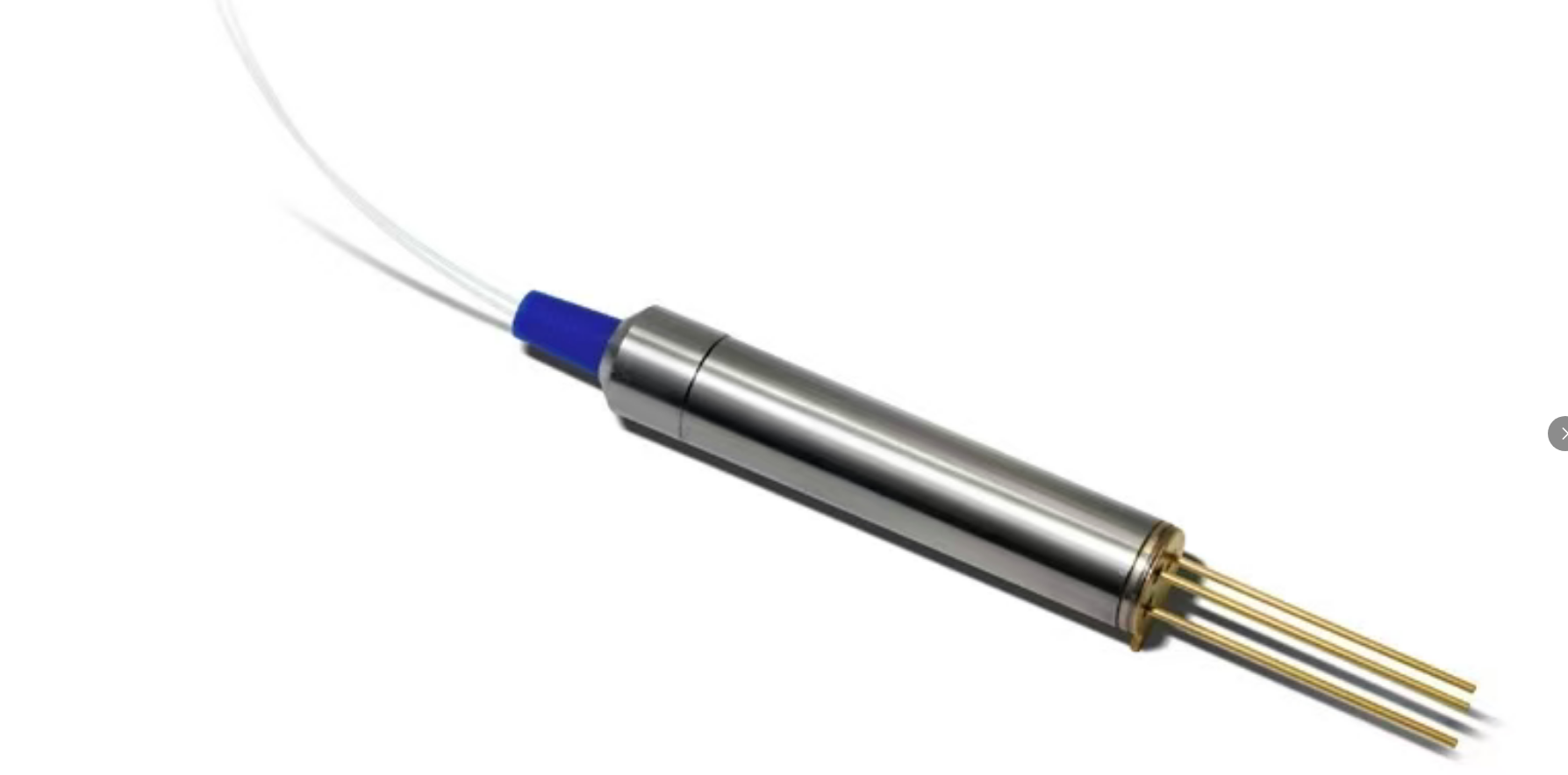
MEMS Multi-Mode 1×8 Optical Switch: Technical Principles and Application Prospects
1. Introduction
With the continuous development of optical fiber communication technology, optical switches, as key devices in optical networks, are widely used for routing, switching, and distributing optical signals. MEMS (Micro-Electro-Mechanical Systems) technology has become an important solution in the field of optical switches due to its unique advantages of high performance, low power consumption, and miniaturization. In particular, the MEMS multi-mode 1×8 optical switch, with its excellent performance in handling multiple signal paths, has become a core component in modern optical fiber communication systems, data centers, and optical networks.
2. Working Principle of MEMS Optical Switches
MEMS optical switches rely on microelectromechanical systems to implement optical signal switching and routing through miniature mechanical structures. The working principle primarily involves the rotation or displacement of MEMS mirrors to guide the optical signal. In the MEMS multi-mode 1×8 optical switch, “1×8” refers to the number of input and output ports, with one input port and eight output ports. MEMS mirrors are precisely controlled to guide the input optical signal to one of the multiple output ports.
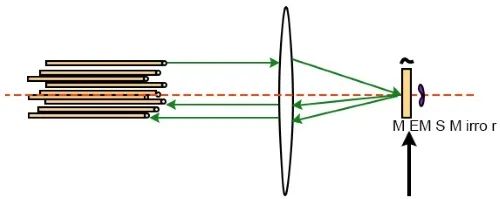
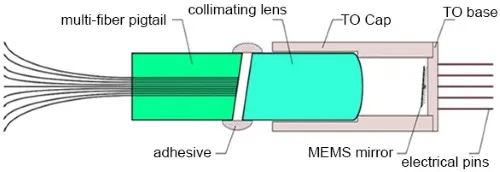
Specifically, a MEMS multi-mode 1×8 optical switch typically consists of the following key components:
-
Micro-Mirror Array: Each micro-mirror can be independently controlled to direct the optical signal to different output ports by rotating or tilting.
-
Drive System: The MEMS mirrors are adjusted via electric drive or voltage control systems.
-
Optical Fiber Interface: The device is connected to external optical fibers through precise fiber interfaces to ensure stable and efficient signal transmission.
These micro-mirrors are typically fabricated using integrated circuit (IC) technology, allowing precise control of the mirror angles to direct the input optical signal to the intended output port. Compared to traditional optical switches, MEMS optical switches offer a smaller footprint, lower power consumption, and higher integration.
3. Applications of MEMS Multi-Mode 1×8 Optical Switches
MEMS multi-mode 1×8 optical switches, with their high efficiency and reliability, are widely applied in various fields:
-
Optical Fiber Communication: In optical fiber communication networks, MEMS optical switches enable high-speed data transmission. By utilizing MEMS technology, optical signals can be routed flexibly according to network requirements, improving system performance and bandwidth.
-
Data Centers: MEMS optical switches are extensively used in data center network optimization, load balancing, and data flow distribution. They support large-scale multi-channel signal transmission, enhancing the flexibility and scalability of data center networks.
-
Optical Testing and Monitoring: MEMS optical switches are used in optical network testing and monitoring, allowing engineers to switch between different channels and perform performance monitoring. For high-speed optical communication debugging and fault diagnosis, MEMS optical switches provide flexible and precise solutions.
-
Satellite Communication: In satellite communication systems, MEMS optical switches enable multi-channel signal switching between multiple ground stations and communication channels, ensuring stable and efficient satellite communication.
-
Optical Sensing and Imaging: MEMS optical switches are used in sensor networks and optical imaging systems to select and switch signals. For example, MEMS optical switches can be applied in remote sensing satellites, medical imaging systems, and environmental monitoring.
4. Advantages of MEMS Multi-Mode 1×8 Optical Switches
-
High Precision and Stability: MEMS optical switches offer extremely high precision and stability, ensuring efficient and accurate optical signal transmission while minimizing signal loss and attenuation.
-
Miniaturization and Integration: MEMS technology allows multiple optical elements to be integrated into a compact device, significantly reducing both the size and cost of the equipment. MEMS multi-mode 1×8 optical switches are not only small but also highly integrated, making them ideal for large-scale deployment.
-
Low Power Consumption: Compared to traditional optical switches, MEMS optical switches consume less power during operation, which helps reduce energy consumption and is ideal for large-scale communication networks.
-
High-Speed Response and Dynamic Switching: MEMS optical switches offer extremely fast response times, enabling real-time optical signal switching for high-speed data transmission.
-
High Reliability and Long Lifespan: The mechanical components of MEMS optical switches are typically made of durable materials, ensuring long-term stable operation and a long lifespan.
5. Future Development and Challenges
Although MEMS multi-mode 1×8 optical switches offer numerous advantages, they still face some technical challenges in their future applications:
-
High-Frequency Switching Requirements: As data volumes continue to increase, the demand for higher switching frequencies also grows. Enhancing the switching speed of MEMS optical switches and increasing their operating frequency without increasing power consumption is a key area for future technological development.
-
Temperature Stability: The performance of MEMS optical switches may be affected by temperature fluctuations. Therefore, improving the stability of these switches in extreme temperature environments remains a crucial issue in ongoing technological research.
-
Manufacturing Costs: Despite the advantages of MEMS technology in terms of miniaturization and low power consumption, the manufacturing costs are relatively high. Reducing the manufacturing cost of MEMS optical switches will be a critical factor in their widespread adoption.
6. Conclusion
MEMS multi-mode 1×8 optical switches, with their high precision, low power consumption, and high integration, have broad application prospects in optical fiber communication, data centers, optical testing, and other fields. With continuous advancements in technology, MEMS optical switches will play an increasingly important role in the future development of optical networks. Although there are still some technical challenges to address, these issues are expected to be effectively resolved, providing strong technical support for the rapid growth of optical networks.
Comments are closed