


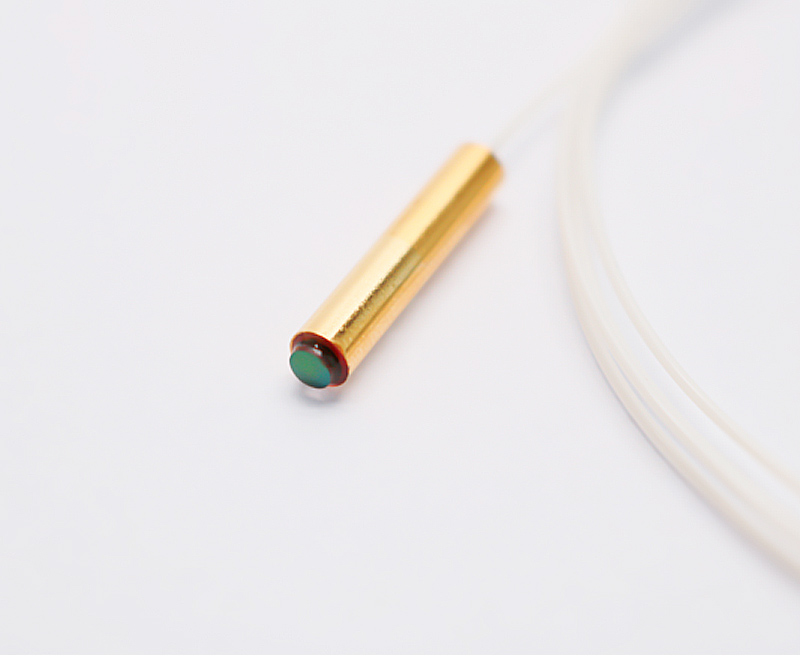
What Is High-Power Fiber Optic Collimator? Features, Benefits, and Applications Explained
In modern optoelectronic systems, as laser power continues to increase, conventional fiber optic components are no longer sufficient to meet the demands of high-power transmission and processing. High-power fiber optic collimators, as critical passive devices, play an irreplaceable role in beam transmission, shaping, and coupling, and are widely used in industrial processing, scientific research, and defense applications.
1. Overview of High-Power Fiber Optic Collimators
High-power fiber optic collimator is a device that converts the divergent light output from an optical fiber into a collimated (parallel) beam. Compared to standard collimators, its design emphasizes high power handling capability, thermal stability, and long-term reliability.
2. Key Features of High-Power Fiber Optic Collimators
2.1 High Power Handling Capability
High-power collimators are typically made of materials such as fused silica or sapphire, combined with high laser damage threshold coatings. They can handle laser power ranging from several watts to kilowatts, minimizing the risk of optical damage.
2.2 Low Insertion Loss
With optimized optical design and precise alignment, insertion loss is minimized, improving overall system efficiency—especially critical in high-energy applications.
2.3 Excellent Thermal Performance
High-power lasers generate significant heat. These collimators are usually packaged in metal housings (e.g., stainless steel or copper alloys) with optimized structures to enhance heat dissipation and ensure stable long-term operation.
2.4 High Beam Quality
Advanced lens designs, such as aspheric lenses or GRIN lenses, help reduce beam divergence and improve output beam quality.
2.5 High Reliability and Stability
Precision packaging and vibration-resistant designs enable stable performance even in harsh environments, such as industrial or outdoor conditions.
2.6 Strong Customization Capability
Parameters can be tailored to specific application needs, including:
- Operating wavelength (e.g., 1064 nm, 1550 nm)
- Fiber type (SM, MM, PM, LMA)
- Beam diameter and working distance
- Connector type (FC/APC, SMA, etc.)
3. Key Technical Considerations
3.1 LMA Fiber Compatibility
Large Mode Area (LMA) fibers are often used to reduce power density at the fiber end face, thereby lowering the risk of damage.
3.2 High Laser Damage Threshold Coatings
Optical coatings must provide both high transmission and extremely high laser-induced damage threshold (LIDT).
3.3 Precision Alignment and Packaging
Micron or even sub-micron alignment accuracy is required to ensure optimal beam quality and stability.
3.4 Thermal Management
Effective structural and material design minimizes thermal lensing effects and prevents beam distortion.
4. Application Fields
4.1 Fiber Laser Systems
Used for beam collimation, shaping, and coupling into downstream optical systems, forming a key part of high-power fiber lasers.
4.2 Laser Material Processing
Widely applied in:
- Laser cutting
- Laser welding
- Laser marking
High-power collimators ensure stable beam output, improving processing precision and efficiency.
4.3 LiDAR Systems
Convert fiber output into high-quality collimated beams for long-distance detection, enhancing signal strength and accuracy.
4.4 Medical Laser Equipment
Used in surgical and therapeutic systems where stable and high-quality beam delivery is essential.
4.5 Scientific Research
Applied in high-energy physics and nonlinear optics experiments that demand exceptional beam quality and stability.
4.6 Defense and Aerospace
Used in laser guidance, optoelectronic countermeasures, and other advanced systems requiring extreme reliability and environmental robustness.
5. Development Trends
With the advancement of high-power laser technologies, high-power fiber optic collimators are evolving toward:
- Higher power handling (kW-level and beyond)
- Miniaturization and integration
- Improved thermal management
- Higher precision and lower loss
- Enhanced environmental adaptability
6. Conclusion
High-power fiber optic collimators serve as a critical bridge between fiber and free-space optical systems. Their performance directly impacts overall system efficiency and stability. As demand for high-power and high-precision laser applications continues to grow, the importance of these devices will only increase.
Comments are closed