


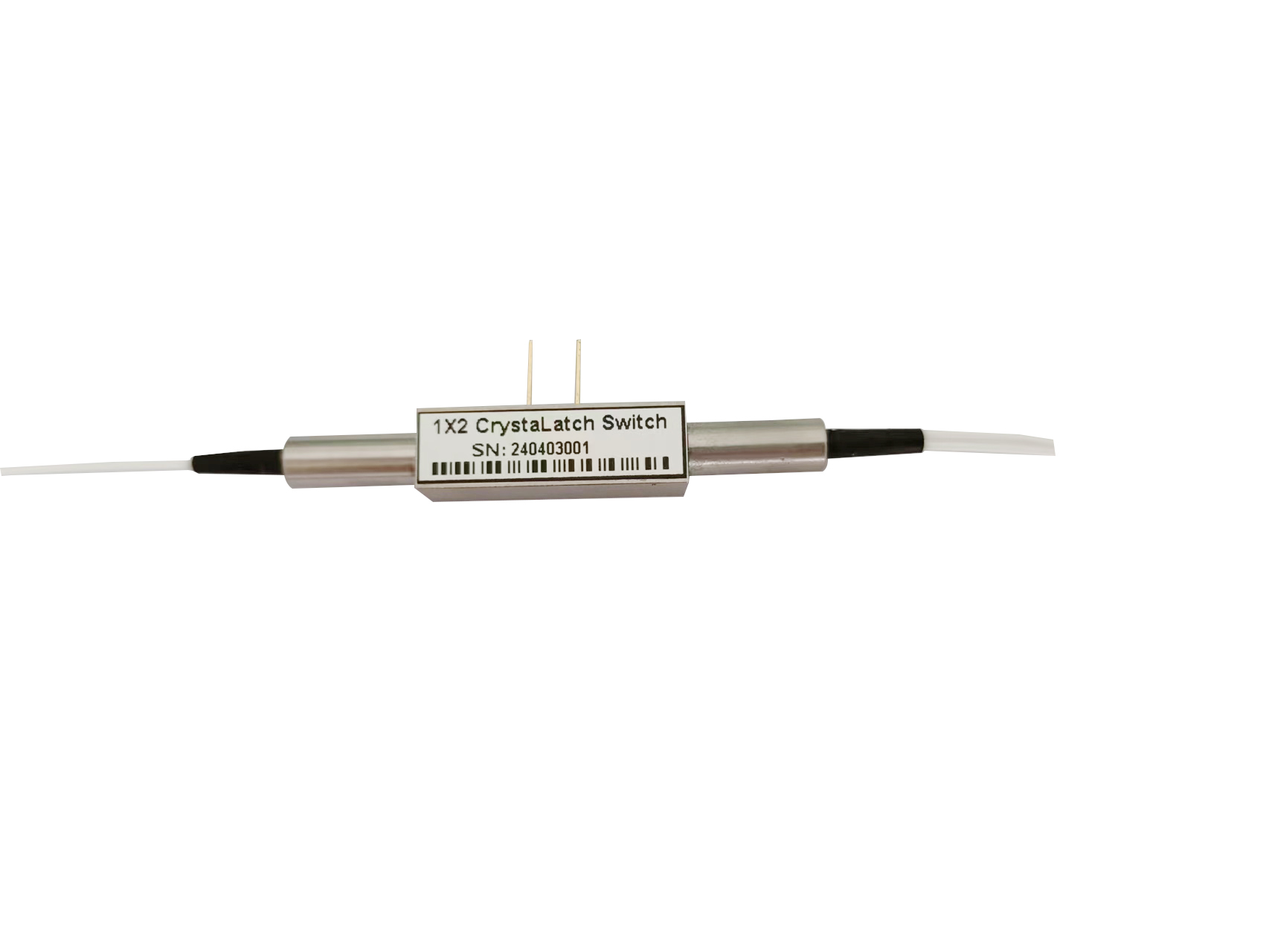
Magneto-optical switch: Overcoming Installation Challenges and Building a Solid Foundation for Optical Switch Stability
I. Introduction: The “Traffic Hub” in Optical Networks and Installation Pain Points
In modern optical communication networks and sensing systems, optical switches play a crucial “traffic hub” role, responsible for selecting, switching, and protecting optical paths. However, traditional optical switches (such as mechanical and MEMS switches) often face engineering challenges during deployment, including complex fiber optic cabling, stringent alignment accuracy requirements, and limited installation space. These “installation chaos” problems not only increase deployment costs and time but may also pose hidden dangers to the long-term stability of the system.
The emergence of magneto-optical hybrid switch devices directly addresses this industry pain point, providing a completely new solution to improve the reliability of optical switch applications through innovative design concepts.
II. Core Principles and Technological Integration of Magneto-optical Hybrid Switches
Magneto-optical switch devices are not a single technology but rather a culmination of the wisdom of magneto-optical effects and advanced optical design/electronic control.
The core of the magneto-optical effect (Faraday effect): Its foundation lies in the property of certain crystals (such as yttrium iron garnet, YIG) or glass to rotate the polarization plane of passing light under the influence of a magnetic field. By controlling the on/off state of the electromagnetic field, non-mechanical switching of the optical path can be achieved.
Hybrid innovations:
* **Integration with planar optical waveguides (PLCs):** Combining magneto-optical materials with PLC technology enables on-chip guidance and switching of the optical path, significantly reducing external fiber optic patching and simplifying installation from the outset.
* **Integration with stable packaging technology:** Employing passive alignment coupling technology and highly stable packaging materials significantly reduces the device’s sensitivity to environmental factors such as temperature and vibration, eliminating the need for frequent calibration after installation.
* **Intelligent drive and control:** Integrating optimized drive circuits and feedback mechanisms ensures fast, precise, and consistent switching actions, improving system-level controllability.
**Significantly improved application stability:** Solving installation chaos is only the first step; the ultimate goal is to achieve stable operation throughout the network’s entire lifecycle.
Leap in Reliability: With no mechanically worn parts, the switch lifespan can reach hundreds of millions of cycles, far exceeding that of mechanical switches, meeting the core network’s requirement for 99.999% high availability.
Enhanced Environmental Adaptability: Excellent temperature stability (e.g., wide operating temperature range of -40℃ to 85℃) and vibration resistance enable deployment in harsh environments such as data centers, vehicles, and the field.
Guaranteed Performance Consistency: Minimal errors introduced during installation and the inherent stability of the device ensure high consistency in optical switch performance across different nodes in the network, simplifying system debugging and optimization.
Power Consumption and Speed Balance: Compared to pure electro-optical switches, it consumes less power; compared to mechanical switches, it offers faster switching speeds (down to microseconds), achieving a good balance between energy saving and performance.
III. Application Prospects
Magneto-optical hybrid devices are gradually demonstrating their significant value in the following areas:
Data Center Optical Switching (DCI): Addressing the needs of high-density, rapid reconfiguration interconnects, simplifying cabling, and improving energy efficiency.
5G/6G fronthaul and midhaul networks: Enables flexible route protection and dynamic resource configuration, adapting to the high reliability requirements of mobile networks.
Intelligent fiber optic sensor networks: Enables rapid, roving monitoring of multiple sensor points, resulting in a simpler and more reliable system structure.
Aerospace and defense: With its high stability and resilience to harsh environments, it is suitable for mission-critical systems.
IV. Conclusion
Magneto-optical switch hybrid devices, through technological fusion and integrated design, fundamentally reshape the installation and user experience of optical switches. They liberate engineers from tedious wiring, precise alignment, and continuous maintenance, transforming the traditional pain point of “chaotic installation” into the core advantage of “plug and play, stable and reliable.”
This is not merely a product upgrade, but a crucial step in driving the evolution of optical network infrastructure towards higher density, higher reliability, and easier maintenance. With continuous technological maturity and cost optimization, magneto-optical hybrid devices are expected to become the standard configuration for future intelligent and robust optical networks, laying a solid foundation for optical transmission in the interconnected digital world.
Comments are closed