


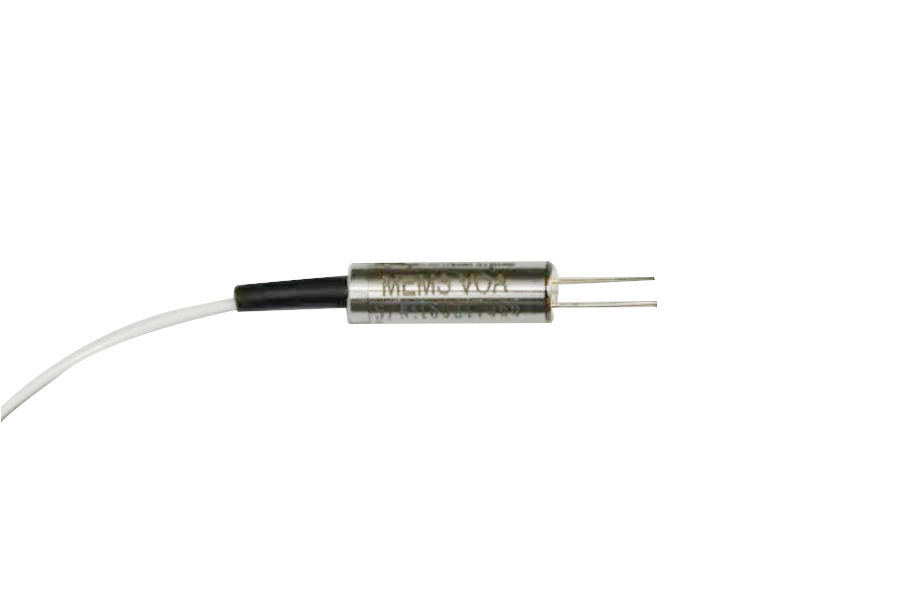
MEMS Optical Attenuators: Fast Response, Miniaturization, and Integration
With the rapid development of fiber optic communication technologies, optical attenuators have become increasingly important in system debugging, performance optimization, and signal stability control. Among various types of optical attenuators, MEMS (Micro-Electro-Mechanical Systems) optical attenuators have become a popular choice due to their excellent performance characteristics, particularly their fast response, miniaturization, and integration advantages.
What is a MEMS Optical Attenuator?
MEMS optical attenuator is an adjustable optical device based on MEMS technology. It controls the level of optical signal attenuation through micro-mechanical structures. In contrast to traditional optical attenuators, MEMS optical attenuators use micro mechanical elements such as micro-mirrors, micro-electrodes, and micro-sensors, which are controlled by electrical signals to precisely adjust the intensity of incoming light.
Fast Response: Efficient Real-time Adjustment
MEMS optical attenuators have an extremely fast response time, typically in the millisecond range, enabling them to meet the high-speed and high-precision demands of optical communication systems. In optical networks, variations in signal strength can affect data transmission stability and quality. Especially at the receiving end of the signal, even small changes can lead to an increase in bit error rate. With their fast response capabilities, MEMS optical attenuators provide timely adjustments when rapid attenuation changes are needed, ensuring the quality and stability of the communication system.
Miniaturization and Integration: Meeting the Needs of Modern Optical Communications
As optical communication devices continue to shrink and integrate, MEMS optical attenuators are ideal choices due to their miniaturized form factor. MEMS technology allows the size of optical attenuators to be reduced to a fraction of traditional devices, while maintaining efficient optical signal attenuation performance. Furthermore, MEMS optical attenuators can be integrated into optical modules or Optical Network Units (ONU), reducing both the size and cost of the devices, while enhancing the overall performance of the system.
Integration is not limited to physical size reduction but also includes the merging of multiple functions. MEMS technology allows for the integration of several optical functions such as attenuation, switching, and modulation, into a single compact device, making system designs simpler and more efficient.
Application Areas
MEMS optical attenuators have a wide range of applications, especially in fiber optic communication and optical networks, where they play a crucial role. Here are some of the main application scenarios:
-
Dynamic Optical Network Adjustment: In modern optical networks, optical attenuators are used to adjust the signal strength in real-time, ensuring signal quality across different distances and environments. MEMS optical attenuators play an important role in providing rapid adjustments to network fluctuations.
-
Adjustable Light Sources and Testing Systems: MEMS optical attenuators are used in optical communication testing and experiments to simulate various optical signal strengths, verifying network fault tolerance and performance. They also offer reliable solutions for adjusting light source output.
-
Fiber to the X (FTTX) Networks: In FTTX networks, MEMS optical attenuators are used to regulate the signal strength at access points, ensuring balanced network quality for different users.
-
Wavelength Division Multiplexing (WDM) Systems: In WDM systems, MEMS optical attenuators can adjust the attenuation of different wavelength signals, ensuring balanced output across different channels, preventing signal distortion or uneven signal strength.
Advantages of MEMS Optical Attenuators
-
High Precision: MEMS optical attenuators provide very high attenuation precision, enabling precise adjustment of attenuation values to meet various application needs.
-
Low Power Consumption: Compared to traditional mechanical optical attenuators, MEMS optical attenuators consume much lower power, which is crucial for modern low-power devices.
-
Long-Term Stability: The mechanical structure of MEMS optical attenuators is highly stable, maintaining good performance over long periods without being significantly affected by environmental factors such as temperature and humidity.
-
Compact Size and High Integration: MEMS optical attenuators are very compact and are well-suited for devices requiring high integration, making them widely used in modern communication equipment.
Conclusion
MEMS optical attenuators, with their fast response, miniaturization, and integration advantages, are increasingly becoming key components in optical communication systems. As technology continues to evolve, MEMS optical attenuators will further develop, providing more efficient and precise optical signal attenuation solutions to meet the demands of high-performance optical networks and communication systems in the future.
Comments are closed