


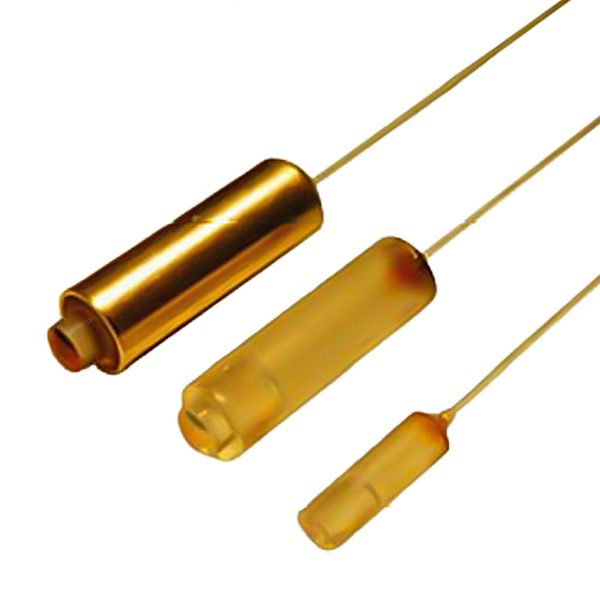
High-Power Multimode Fiber Collimator: High Damage Threshold and Large-Core Beam Output Solution
With the rapid development of industrial lasers, fiber sensing, medical equipment, and scientific research systems, the demand for high-power multimode fiber transmission devices continues to grow. Especially in high-power laser coupling and long-distance beam transmission applications, traditional single-mode collimators are no longer sufficient to meet the requirements for high power handling capability and large beam output.
As a result, High-Power Multimode Fiber Collimators have become key components in high-power optical systems due to their high damage threshold, large-core fiber compatibility, and stable beam output performance.
What Is a High-Power Multimode Fiber Collimator?
A high-power multimode fiber collimator is an optical device that converts divergent light emitted from a multimode fiber into a parallel beam. It is widely used in:
- High-power laser output systems
- Laser coupling systems
- Industrial laser processing
- Medical laser equipment
- Laser measurement and sensing
- Fiber optic illumination systems
- Scientific research platforms
Compared with standard fiber collimators, high-power versions focus more on:
- Optical power handling capability
- Thermal stability
- Coating durability
- Large-core fiber compatibility
- Long-term operational reliability
Key Features of High-Power Multimode Fiber Collimators
1. High Damage Threshold Design
In high-power laser systems, the damage threshold of optical components is extremely important.
High-power multimode collimators are typically designed with:
- High-durability optical coatings
- Low-absorption lens materials
- Precision thermal management structures
- Metal packaging for enhanced heat dissipation
These features effectively reduce issues caused by high-power lasers, including:
- Coating burn damage
- Fiber end-face damage
- Thermal drift
- Beam distortion
Suitable for:
- Continuous-wave (CW) laser systems
- Pulsed laser systems
- Power levels ranging from several watts to tens of watts
2. Support for Large-Core Multimode Fibers
Compared with single-mode fibers, multimode fibers usually have much larger core diameters, such as:
| Fiber Type | Core Diameter |
|---|---|
| 50/125μm | 50μm |
| 62.5/125μm | 62.5μm |
| 105/125μm | 105μm |
| 200/220μm | 200μm |
| 400μm Fiber | 400μm |
Large-core structures provide several advantages:
- Higher optical power handling
- Reduced power density
- Improved coupling tolerance
- Enhanced system stability
This makes them particularly suitable for high-power laser transmission applications.
Advantages of Large Beam Output
High-power multimode collimators can achieve:
- Large-diameter collimated beam output
- Long working distances
- Uniform beam distribution
- Lower divergence angles
By optimizing focal length and NA parameters, different beam sizes can be achieved:
| Working Distance | Beam Spot Size |
|---|---|
| 100mm | 1~2mm |
| 500mm | 2~5mm |
| 1000mm | Larger beam output |
Ideal for:
- Laser marking
- Laser illumination
- Laser scanning
- Laser ranging
- Industrial vision systems
Common Operating Wavelengths
High-power multimode fiber collimators commonly support:
- 405nm
- 450nm
- 520nm
- 635nm / 637nm
- 808nm
- 915nm
- 976nm
- 1064nm
- 1310nm
- 1550nm
Customized AR anti-reflection coatings are available for different wavelengths to minimize reflection loss and improve transmission efficiency.
Packaging Options
Different packaging structures are available depending on application requirements.
Metal Tube Package
Features:
- Excellent heat dissipation
- High structural stability
- Suitable for high-power applications
SMA905 Interface
Widely used in:
- Laser equipment
- Spectroscopy systems
- Medical devices
FC / SMA / Custom Interfaces
Available options include:
- FC connectors
- SMA connectors
- Bare fiber output
- OEM customized structures
Difference Between Multimode and Single-Mode Collimators
| Item | Multimode Collimator | Single-Mode Collimator |
|---|---|---|
| Fiber Core Diameter | Large | Small |
| Power Handling | High | Lower |
| Beam Quality | Lower | Better |
| Coupling Tolerance | More Flexible | More Critical |
| Main Application | High-power transmission | Precision communication |
For high-power applications, multimode solutions are generally more reliable.
Typical Application Areas
Industrial Laser Systems
Used in:
- Laser cutting
- Laser welding
- Laser marking
Medical Laser Equipment
Applied in:
- Laser therapy
- Photodynamic systems
- Medical illumination
Fiber Optic Sensing
Suitable for:
- Fiber testing
- Industrial monitoring
- Scientific measurement
Research and Laboratory Systems
Used for:
- Laser experiments
- Beam shaping
- Optical platforms
How to Select the Right High-Power Multimode Fiber Collimator
The following parameters should be carefully considered:
1. Fiber Type
Examples:
- 50/125μm
- 105/125μm
- 200μm
2. Numerical Aperture (NA)
Different NA values affect:
- Divergence angle
- Beam size
- Coupling efficiency
3. Operating Wavelength
Must match the corresponding optical coating.
4. Working Distance
Determines the output beam size.
5. Output Beam Requirements
Including:
- Beam spot diameter
- Beam parallelism
- Divergence angle
6. Power Level
Need to confirm:
- Continuous power
- Peak power
- Operating environment
Conclusion
With the continuous advancement of high-power laser technology, high-power multimode fiber collimators are becoming essential components in industrial and scientific optical systems.
Their major advantages include:
- High damage threshold
- Large-core fiber compatibility
- High power handling capability
- Stable beam output
- Flexible customization options
For applications requiring high reliability and stability, selecting the right high-power multimode fiber collimator can significantly improve the overall performance and lifetime of the optical system.
Comments are closed