


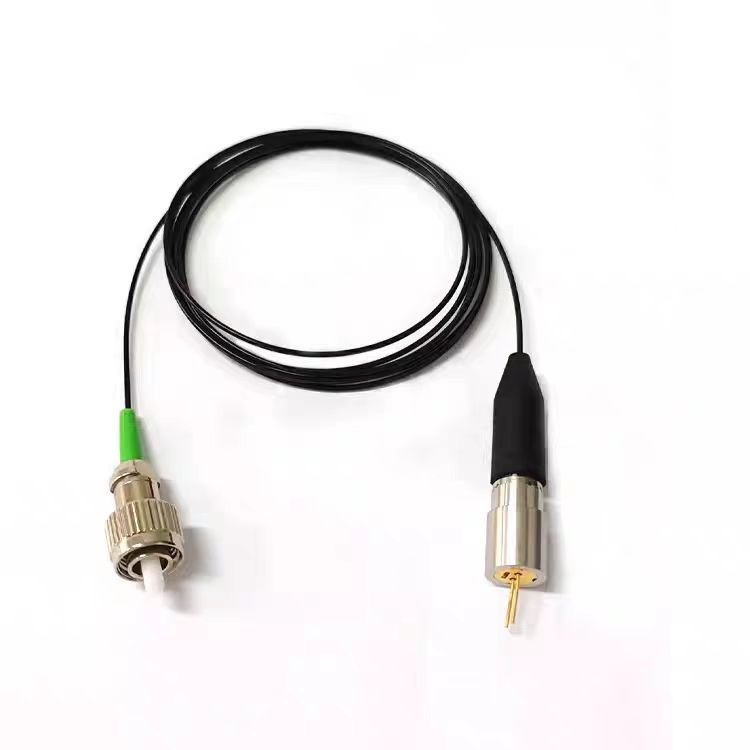
Why High-Power Lasers Are More Likely to Damage Fiber Optic End Faces
With the development of optical communications, laser processing, and laser sensing technologies, high-power lasers are widely used in both industrial and research applications. However, during fiber optic transmission, high-power lasers often lead to end-face damage or even burning, which becomes a major factor affecting system stability and lifespan. This article explores the reasons behind this phenomenon and suggests corresponding protective measures.
1. Basic Principles of Fiber End-Face Damage
The fiber end face is a critical region where laser energy enters or exits the fiber. When a laser beam enters the fiber, if the power density is too high, the fiber material (typically fused silica) absorbs part of the energy, generating localized heat. Excessive heat can cause several types of damage:
-
Melting and Evaporation: If the local temperature exceeds the melting point of the fiber glass, the end face may develop small pits or even vaporization.
-
Thermal Cracking: Uneven thermal expansion can lead to cracks, affecting optical performance.
-
Exceeding the Optical Damage Threshold: Fiber materials have a certain tolerance to laser energy, known as the optical damage threshold. High-power lasers can easily surpass this threshold, causing end-face damage.
2. Why High-Power Lasers Are More Prone to Burn Fiber End Faces
Compared with low-power lasers, high-power lasers are more likely to damage fiber end faces due to the following reasons:
-
High Power Density
The higher the laser power, the greater the energy per unit area. The fiber core is typically only a few micrometers in diameter. High-power laser beams can create power densities of several kW/cm², which easily cause glass melting or vaporization. -
Uneven Beam Profile and Mode Effects
High-power lasers often operate in multimode or higher-order modes, resulting in non-uniform energy distribution within the core. Local hotspots can lead to end-face burning. -
Amplification of End-Face Contamination
Even tiny amounts of dust, oil, or uneven coatings on the fiber end face can absorb energy. High-power laser exposure intensifies this effect, creating burn spots. -
Enhanced Nonlinear Effects
During propagation of high-power lasers in fibers, nonlinear optical effects (such as self-focusing and stimulated scattering) may occur, further concentrating local energy and accelerating end-face damage.
3. Consequences of Fiber End-Face Damage
-
Increased Insertion Loss: Micro-cracks or pits on the end face scatter or absorb light, reducing transmission efficiency.
-
Increased Reflection: Damaged end faces can produce back-reflections, affecting laser stability and potentially damaging the laser source.
-
Reduced System Reliability: High-power fiber systems are highly sensitive to end-face damage; a burned end face can cause system interruptions or shutdowns.
4. Protective and Mitigation Measures
To prevent high-power laser from burning fiber end faces, the following measures can be taken:
-
End-Face Cleaning: Ensure the fiber end face is free of dust and oil using high-purity alcohol and specialized cleaning wipes.
-
Select Appropriate Fiber: Use fibers with larger core diameters or higher damage thresholds for high-power lasers to reduce power density.
-
Optimize Beam Quality: Uniform beam profiles reduce local hotspots.
-
Use End-Face Protection: Fiber protective caps, windows, or coatings can help dissipate heat effectively.
-
Gradual Power Increase: Avoid exposing fibers to instantaneous high-power lasers; gradually ramping up power reduces thermal shock.
5. Conclusion
High-power laser-induced fiber end-face damage is caused by a combination of high power density, local hotspots, end-face contamination, and nonlinear optical effects. Understanding these mechanisms and implementing proper protective measures can extend fiber lifespan and ensure system stability and safety. When designing high-power fiber systems, selecting suitable fiber types, maintaining clean end faces, and controlling laser power are key to preventing end-face burning.
Comments are closed