


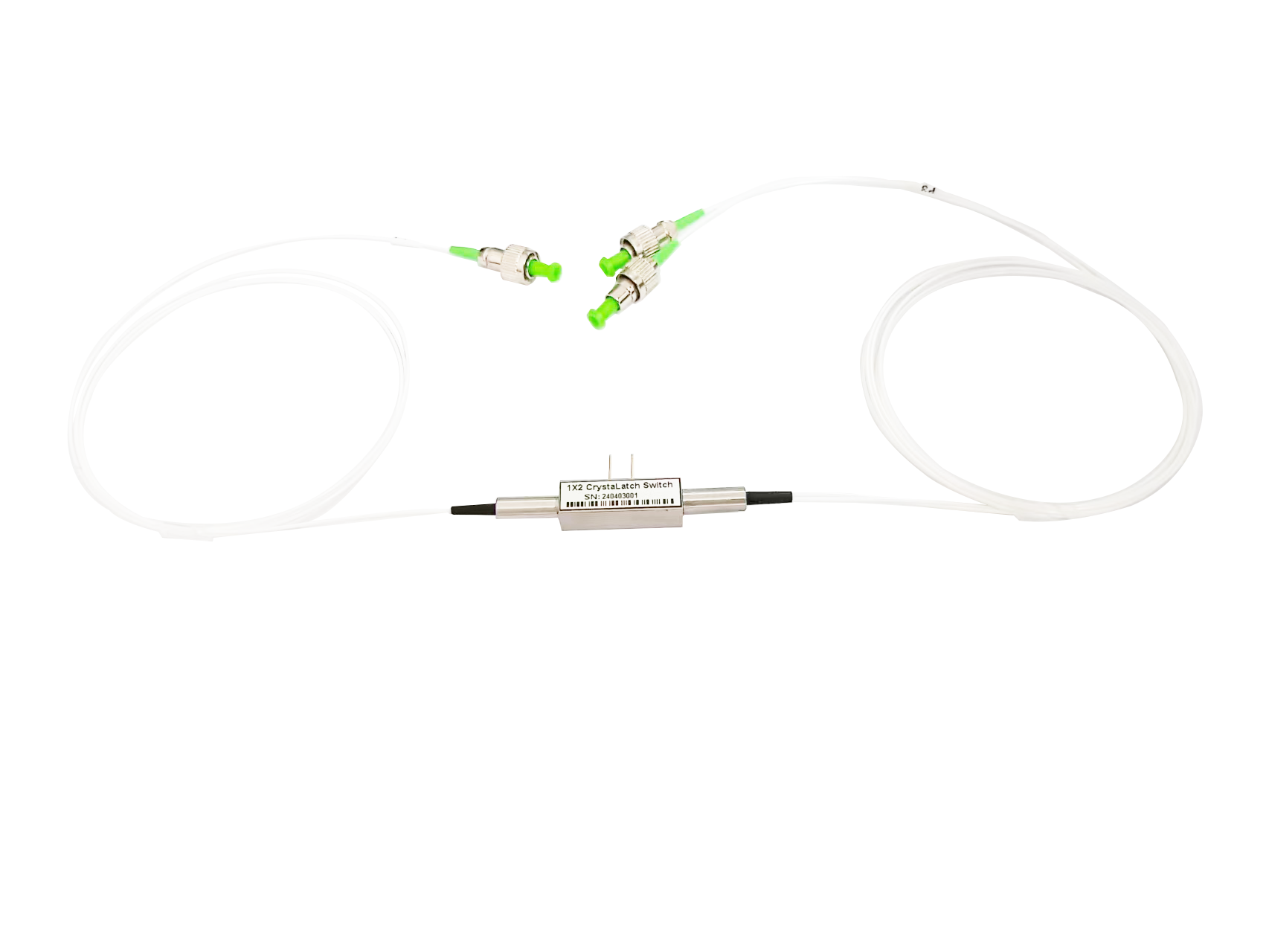
1×2 Magneto-Optic Optical Switch: Unidirectional vs Bidirectional — Differences and Selection Guide
In optical communication systems, fiber testing setups, and optical protection applications, the 1×2 magneto-optic optical switch is widely used due to its high reliability and stability. A common question during selection is:
What is the difference between unidirectional and bidirectional magneto-optic switches, and how do you choose the right one?
This article provides a clear comparison covering working principles, structural differences, application scenarios, and practical selection tips.
1. What Is 1×2 Magneto-Optic Optical Switch?
1×2 magneto-optic switch uses the Faraday Effect to control the light path, allowing one input optical signal to be switched between two output ports.
Compared with mechanical optical switches, it offers:
- No mechanical wear
- High reliability and long lifetime
- Strong resistance to vibration
- Suitable for harsh environments (aerospace, industrial systems, etc.)
2. Key Differences: Unidirectional vs Bidirectional
2.1 Light Transmission Direction
Unidirectional Magneto-Optic Switch
- Light propagates in a fixed direction (e.g., Port 1 → Port 2 or Port 3)
- Reverse transmission is not supported
Bidirectional Magneto-Optic Switch
- Light can propagate in both directions (Port A ↔ Port B)
- Any port can act as input or output
👉 Simple analogy:
- Unidirectional = “one-way street”
- Bidirectional = “two-way street”
2.2 Structural Design
- Unidirectional switches have a simpler structure and are optimized for one direction
- Bidirectional switches require more complex designs to maintain stable performance in both directions
2.3 Performance Comparison
| Parameter | Unidirectional Switch | Bidirectional Switch |
|---|---|---|
| Insertion Loss | Lower (optimized) | Slightly higher |
| Isolation | Higher | Slightly lower |
| Cost | Lower | Higher |
| Flexibility | Limited | High |
2.4 Application Scenarios
Unidirectional applications:
- Optical communication network switching
- Optical module testing systems
- Signal protection with fixed direction
- Data center link switching
Bidirectional applications:
- Fiber sensing systems (e.g., OTDR testing)
- Bidirectional communication links
- Laboratory optical routing
- Flexible optical networks
3. How to Choose: Unidirectional or Bidirectional?
When selecting a 1×2 magneto-optic switch, consider the following:
3.1 Do you need bidirectional transmission?
- If no → choose unidirectional
- If yes / uncertain → choose bidirectional
3.2 Are you sensitive to insertion loss?
- High-precision systems (fiber lasers, test equipment) → unidirectional recommended
- General applications → either option works
3.3 System complexity
- Fixed and simple topology → unidirectional (cost-effective)
- Flexible or reconfigurable systems → bidirectional
3.4 Budget considerations
- Cost-sensitive projects → unidirectional
- Performance/flexibility priority → bidirectional
4. Practical Engineering Recommendations
✅ Choose Unidirectional if:
- DWDM network switching
- Automated test equipment (ATE)
- One-way signal monitoring
✅ Choose Bidirectional if:
- OTDR systems
- Fiber sensing (distributed sensing)
- R&D laboratory setups
- Bidirectional communication systems
5. Key Parameters to Confirm Before Purchasing
When sourcing a 1×2 magneto-optic switch, make sure to check:
- Operating wavelength (1310 nm / 1550 nm)
- Insertion loss
- Isolation
- Switching time
- Control interface (TTL / RS232)
- Package type (module / bare device)
- Fiber type (SM / PM)
6. Summary
The core difference can be summarized in one sentence:
👉 Unidirectional = lower loss, higher stability, lower cost
👉 Bidirectional = greater flexibility, broader applications
If your optical path is fixed, choose a unidirectional switch.
If flexibility or reverse transmission is required, a bidirectional switch is the better option.
Comments are closed