


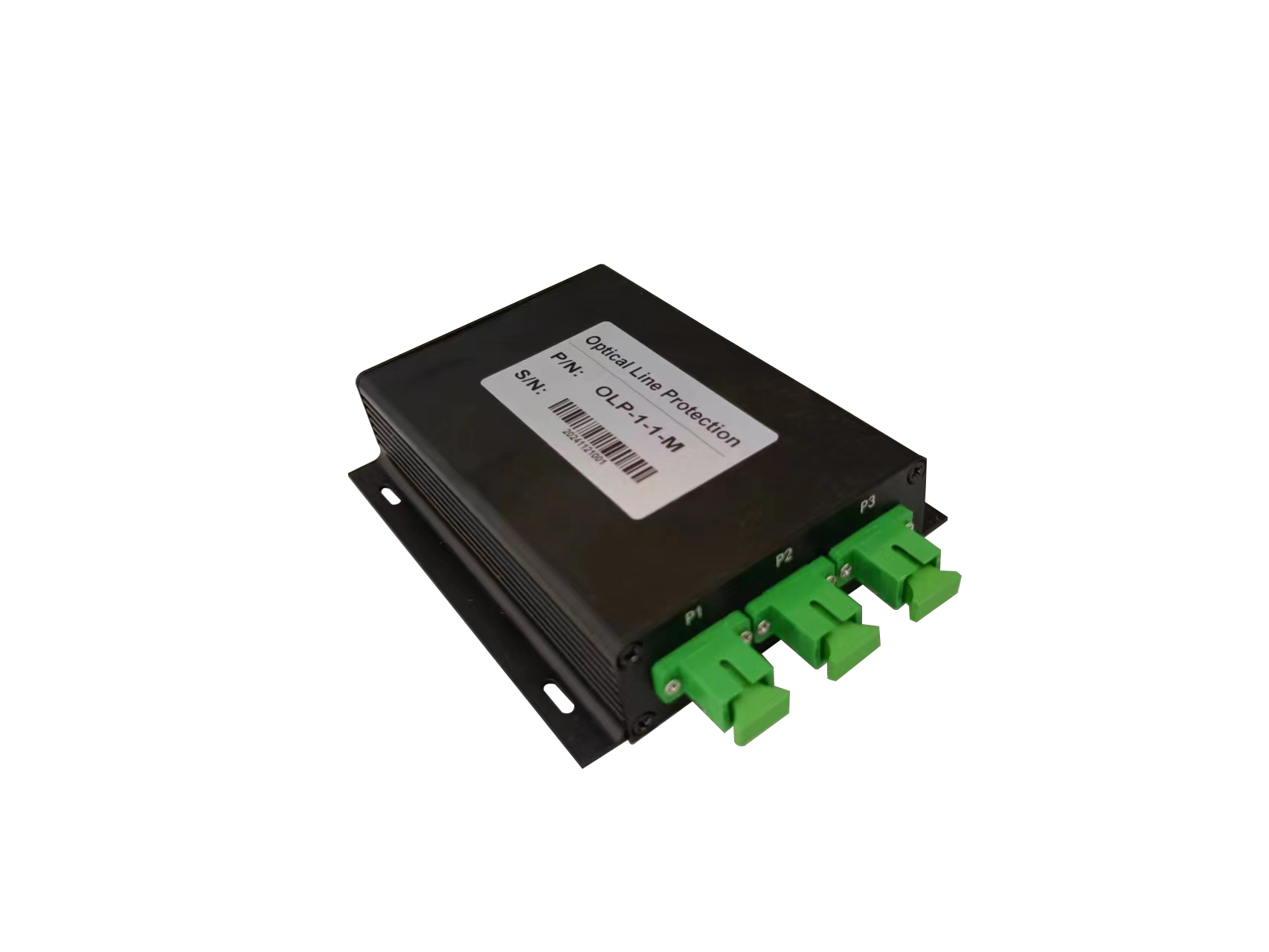
5G Fronthaul Optical Switch Protection Switching Solution: Ensuring Reliable Wireless Network Operation
With the rapid deployment of 5G networks, the fronthaul network, which connects the Baseband Unit (BBU) and the Active Antenna Unit (AAU), has become a critical part of the communication infrastructure. Any failure in the optical fiber link can directly affect service continuity. Therefore, optical switch-based protection switching solutions have become an effective way to enhance the reliability of 5G fronthaul networks.
Challenges in 5G Fronthaul Networks
The large-scale deployment of 5G base stations has significantly increased the complexity and size of fronthaul fiber networks. Factors such as fiber cuts, equipment failures, and network maintenance may interrupt data transmission. Traditional manual switching methods are slow and cannot meet the stringent requirements of 5G networks for high reliability and low latency.
As a result, an automatic protection mechanism capable of detecting faults and restoring services rapidly is essential.
Principle of Optical Switch Protection Switching
Typical optical protection system consists of a working path, a backup path, and an optical switch controller.
Under normal conditions, traffic is transmitted through the primary fiber link. When the system detects abnormalities such as optical power degradation or link interruption, the controller immediately drives the optical switch to redirect the signal to the standby path, enabling service recovery within milliseconds and ensuring uninterrupted communication.
The entire switching process is automatic and provides 24/7 protection without manual intervention.
Advantages of Optical Switch Protection for 5G Fronthaul
1. Fast Fault Recovery
Optical switches can complete path switching within milliseconds, minimizing service interruption and improving network availability.
2. Enhanced Network Reliability
A primary and backup fiber architecture ensures continuous communication even when the main link fails, meeting the high reliability requirements of telecom operators.
3. Reduced Maintenance Costs
Automatic protection switching reduces the need for manual inspections and on-site maintenance, improving operational efficiency and lowering maintenance expenses.
4. Remote Monitoring and Control
The system supports remote management through RS232, RS485, Ethernet interfaces, and SNMP protocols, enabling intelligent network operation and maintenance.
5. High Reliability and Long Lifetime
Based on mechanical optical switch or MEMS optical switch technology, the system offers low insertion loss, high isolation, long operating life, and excellent stability, making it suitable for demanding telecom environments.
Typical Architecture
In 5G fronthaul networks, a 1+1 protection configuration is commonly adopted:
- The primary fiber link carries normal traffic;
- The backup fiber link remains on standby;
- Optical power monitoring continuously supervises link status;
- When a fault occurs on the primary path, the optical switch automatically transfers traffic to the backup path;
- After the primary link is restored, the system can switch back automatically or manually, depending on the configuration.
This solution is widely used in:
- 5G fronthaul networks;
- C-RAN (Centralized Radio Access Networks);
- Data Center Interconnection (DCI);
- Metropolitan optical transport networks;
- Edge computing infrastructure;
- Telecom carrier backbone networks.
Xionghua Photoelectric 5G Fronthaul Protection Solutions
As a professional manufacturer of fiber optic components and subsystems, Xionghua Photoelectric provides a comprehensive range of optical protection products, including:
- Optical Line Protection (OLP) systems;
- 1×2 and 2×2 mechanical optical switches;
- MEMS optical switches;
- Rack-mounted intelligent optical switch platforms;
- Remote control solutions supporting SNMP, Web, and RS232 interfaces;
- Customized protection solutions tailored to customer network architectures.
Our products feature low insertion loss, high reliability, fast switching, and long-term stability, providing secure and efficient optical path protection for next-generation communication networks.
Conclusion
As 5G, cloud computing, and edge computing continue to evolve, network continuity and reliability have become increasingly important. Optical switch-based protection switching solutions enable automatic fault recovery, improve network availability, and reduce maintenance costs. They have become a key technology for building highly reliable 5G fronthaul networks and will play an even more important role in future intelligent communication infrastructures.
Comments are closed