


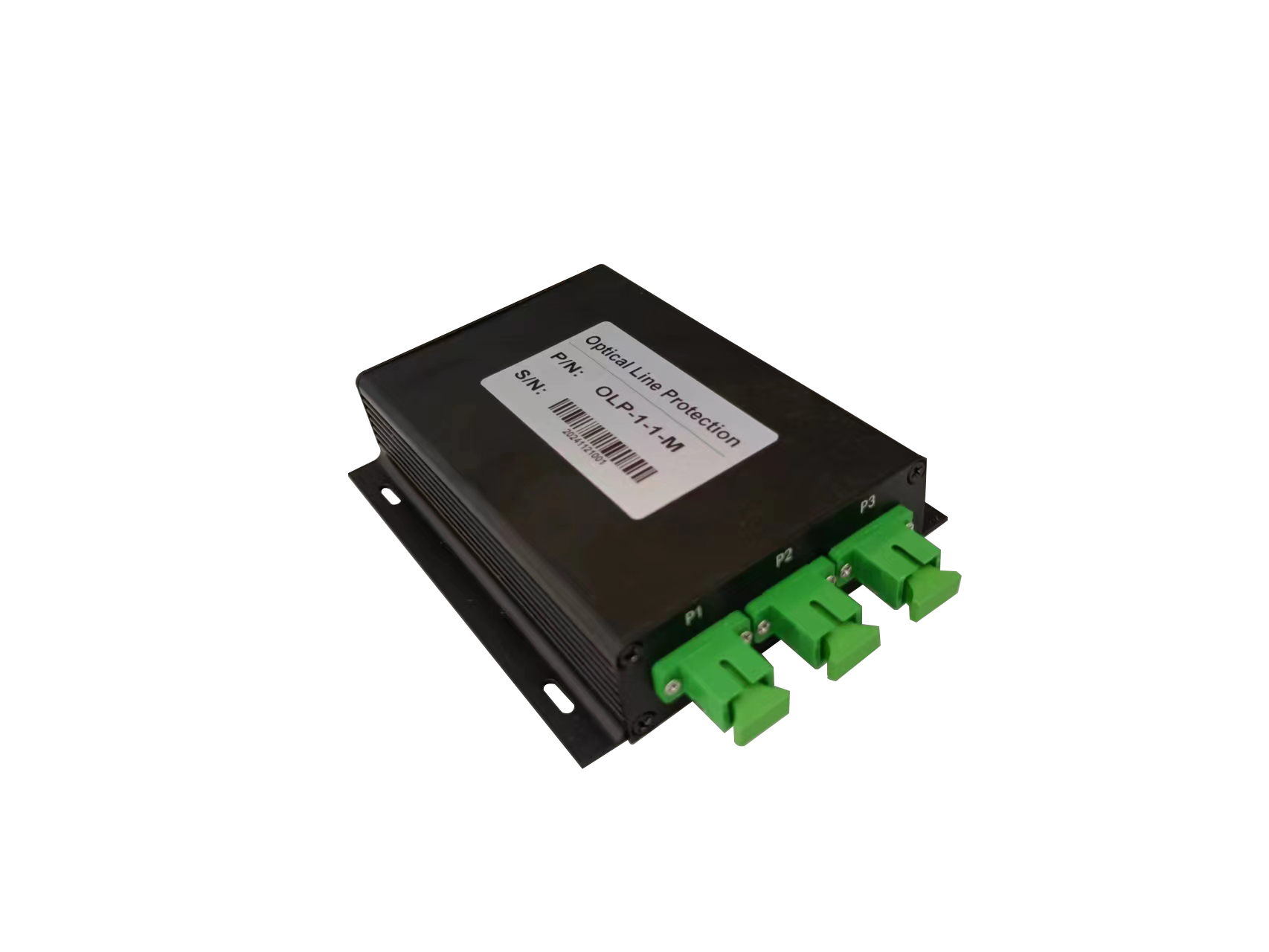
OLP vs. OBP: Which Fiber Optic Protection Solution Is Right for Your Network?
In modern fiber optic communication networks, service continuity is critical. A single fiber cut or equipment failure can interrupt key services, resulting in costly downtime. To improve network reliability, two common protection technologies are widely used: Optical Line Protection (OLP) and Optical Bypass Protection (OBP).
Although both solutions are designed to improve network availability, they protect different parts of the network and serve different purposes. Understanding their differences will help you choose the right solution for your application.
What Is Optical Line Protection (OLP)?
Optical Line Protection (OLP) is designed to protect fiber transmission lines. It monitors the optical power of both the working fiber and the backup fiber in real time. When the primary fiber experiences excessive loss or a complete interruption, the OLP module automatically switches traffic to the backup fiber within milliseconds.
Key Features
- Automatic fiber path monitoring
- Millisecond-level switching speed
- Low insertion loss
- High reliability and long service life
- Supports single-mode and customized wavelength ranges
Typical Applications
- Backbone fiber networks
- Metro optical networks
- Data centers
- Telecom transmission systems
- Mission-critical communication links
What Is Optical Bypass Protection (OBP)?
Optical Bypass Protection (OBP) protects active network equipment instead of the transmission fiber. If a device such as an amplifier, switch, or monitoring system loses power or fails, the OBP module automatically bypasses the failed equipment, allowing the optical signal to continue traveling through the network.
This prevents a single equipment failure from interrupting the entire communication link.
Key Features
- Automatic equipment bypass during power failure
- No manual intervention required
- Protects critical active devices
- Supports fail-safe operation
- Fast optical path recovery
Typical Applications
- OTDR online monitoring systems
- Optical amplifiers (EDFA)
- Optical switches
- Fiber sensing systems
- Network maintenance and monitoring equipment
OLP vs. OBP: Key Differences
| Feature | OLP | OBP |
|---|---|---|
| Protection Target | Fiber transmission line | Active network equipment |
| Trigger Condition | Fiber degradation or break | Equipment failure or power loss |
| Backup Method | Switches to standby fiber | Bypasses failed equipment |
| Primary Purpose | Maintain fiber link continuity | Keep optical path alive during equipment failure |
| Typical Applications | Telecom, backbone networks, data centers | OTDR monitoring, EDFA, optical testing systems |
Which Solution Should You Choose?
Choose OLP if your primary concern is protecting fiber links from accidental cuts, excessive attenuation, or transmission failures.
Choose OBP if you need to ensure uninterrupted communication when active equipment fails or requires maintenance.
In many carrier-grade optical networks, OLP and OBP are deployed together. OLP protects the transmission path, while OBP protects the network equipment, providing comprehensive end-to-end network resilience.
Why Choose Xionghua Photoelectric?
Xionghua Photoelectric offers high-performance fiber optic protection solutions for communication, data center, industrial, and fiber sensing applications.
Our products feature:
- Fast switching performance
- Low insertion loss
- High optical reliability
- Long operational lifetime
- Customized fiber types, connectors, and wavelengths
- OEM and ODM services
Whether you need Optical Line Protection (OLP) or Optical Bypass Protection (OBP), our engineering team can help you design the most suitable solution for your network architecture.
Conclusion
Both OLP and OBP are essential technologies for building highly available fiber optic networks, but they solve different problems. OLP protects the transmission line, while OBP protects active equipment. Selecting the appropriate solution—or combining both—can significantly improve network reliability, reduce downtime, and lower maintenance costs.
Comments are closed