


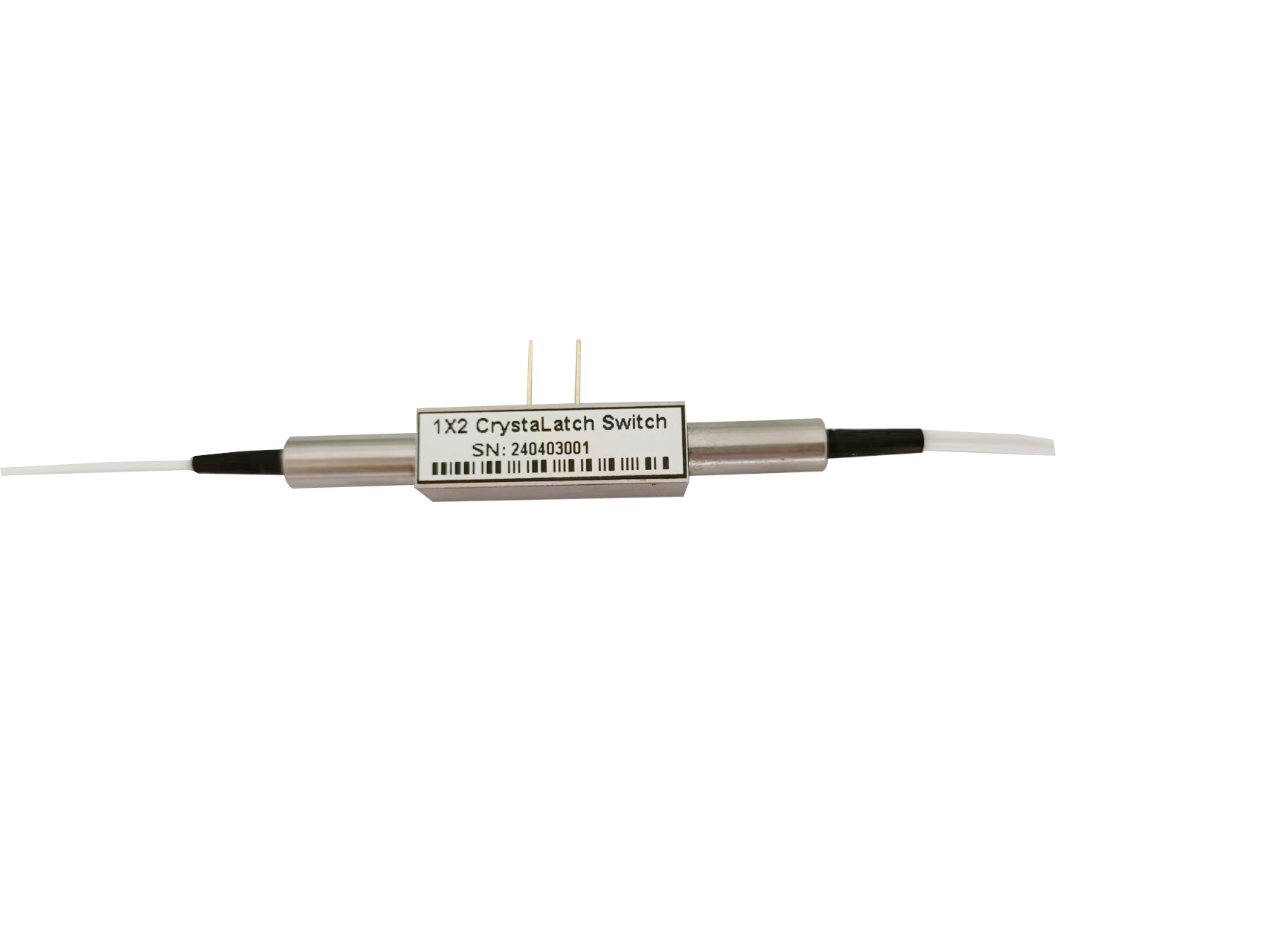
Why Does Temperature Affect the Performance of Optical Switches?
In fiber optic communications, data centers, fiber sensing, laser systems, and optical testing applications, optical switches play a vital role in routing optical signals. When selecting an optical switch, users often focus on specifications such as insertion loss, switching speed, and service life. However, one equally important factor is often overlooked—temperature stability.
In reality, temperature fluctuations can significantly impact the performance of an optical switch and even affect the reliability of the entire optical network. So, why does temperature affect optical switch performance? This article explains the key reasons behind this phenomenon.
Why Does Temperature Affect Optical Switches?
An optical switch consists of highly precise components, including mechanical structures, MEMS mirrors, magneto-optical elements, fiber optic collimators, lenses, and electronic driver circuits. Each of these components responds differently to changes in temperature.
The primary effects can be categorized into the following aspects.
1. Thermal Expansion Causes Optical Misalignment
Inside an optical switch, the optical fibers and collimators must be aligned with extremely high precision—typically within just a few micrometers.
As the ambient temperature changes:
- Metal housings expand or contract.
- Fiber holding structures experience slight displacement.
- The focal position of the collimator shifts.
- Optical coupling efficiency decreases.
Even a positional shift of only a few micrometers can result in:
- Increased insertion loss
- Reduced return loss
- Lower optical output power
For high-performance optical communication systems, maintaining precise optical alignment is essential.
2. MEMS Mirror Position Changes
For MEMS optical switches, optical signal routing is achieved through microscopic movable mirrors.
Temperature variations may cause:
- Thermal stress within the MEMS structure
- Slight changes in driving voltage
- Minute angular deviations of the MEMS mirror
Although these angle changes may only be a few microradians, after light travels through the optical path, they can lead to noticeable beam displacement and reduced fiber coupling efficiency.
This is one of the reasons why premium MEMS optical switches incorporate advanced temperature compensation technology.
3. Optical Fiber Refractive Index Changes with Temperature
Optical fiber itself is not completely immune to temperature.
As temperature changes, the refractive index of the fiber also changes, which may lead to:
- Variations in light propagation speed
- Polarization state changes
- Phase drift
- Reduced polarization-maintaining performance
These effects are particularly critical in applications such as:
- Polarization Maintaining (PM) Optical Switches
- Fiber optic interferometers
- Fiber optic sensing systems
- Coherent optical communication
Therefore, these applications typically require optical switches with superior thermal stability.
4. Electronic Driver Circuits Are Temperature Sensitive
Besides the optical components, the electronic control system is also influenced by temperature.
Temperature fluctuations may result in:
- Driving voltage drift
- Reduced MCU stability
- Slower electromagnetic actuator response
- Lower MEMS driving accuracy
Under extreme temperatures, these effects may cause:
- Slower switching speed
- Incomplete switching
- Control instability
For this reason, high-quality optical switches are typically designed using industrial-grade electronic components to ensure reliable operation across a wide temperature range.
How Temperature Changes Affect Optical Switch Performance
Without proper thermal design, temperature variations may lead to several performance issues, including:
- Increased insertion loss
- Lower return loss
- Poor repeatability
- Reduced switching stability
- Higher polarization-dependent loss (PDL)
- Lower extinction ratio (for PM optical switches)
- Shortened service life
For mission-critical applications operating 24/7, such as telecommunications networks and data centers, these performance degradations can directly impact overall system reliability.
How High-Quality Optical Switches Maintain Thermal Stability
Leading optical switch manufacturers implement multiple design strategies to minimize temperature-related performance variations, including:
- High-precision optical alignment technology
- Low thermal expansion materials
- Industrial-grade MEMS chips and driver circuits
- Advanced temperature compensation design
- High- and low-temperature cycling tests
- Long-term aging and reliability testing before shipment
These measures significantly reduce thermal drift and ensure consistent optical performance even in demanding environments.
How to Choose an Optical Switch for Harsh Environments
If your application involves:
- Data centers
- 5G communication networks
- Fiber monitoring systems
- Fiber laser equipment
- Aerospace
- Defense and military systems
- Industrial automation
- Outdoor telecommunication infrastructure
You should pay close attention to the following specifications:
- Operating temperature range (e.g., –40°C to +85°C)
- Insertion loss stability
- Repeatability
- Polarization-dependent loss (PDL)
- Mechanical lifetime
- High- and low-temperature test reports
These parameters are often far more important than price alone when evaluating product quality.
Conclusion
Although temperature changes may seem insignificant, they can influence optical switch performance through thermal expansion, optical misalignment, refractive index variation, and electronic drift. Therefore, selecting an optical switch should involve more than simply comparing insertion loss or switching speed—it is equally important to consider temperature stability and environmental reliability.
Comments are closed