


Why Choose a Latching Optical Switch? Reduce Power Consumption and Maintain Optical Path State
Introduction
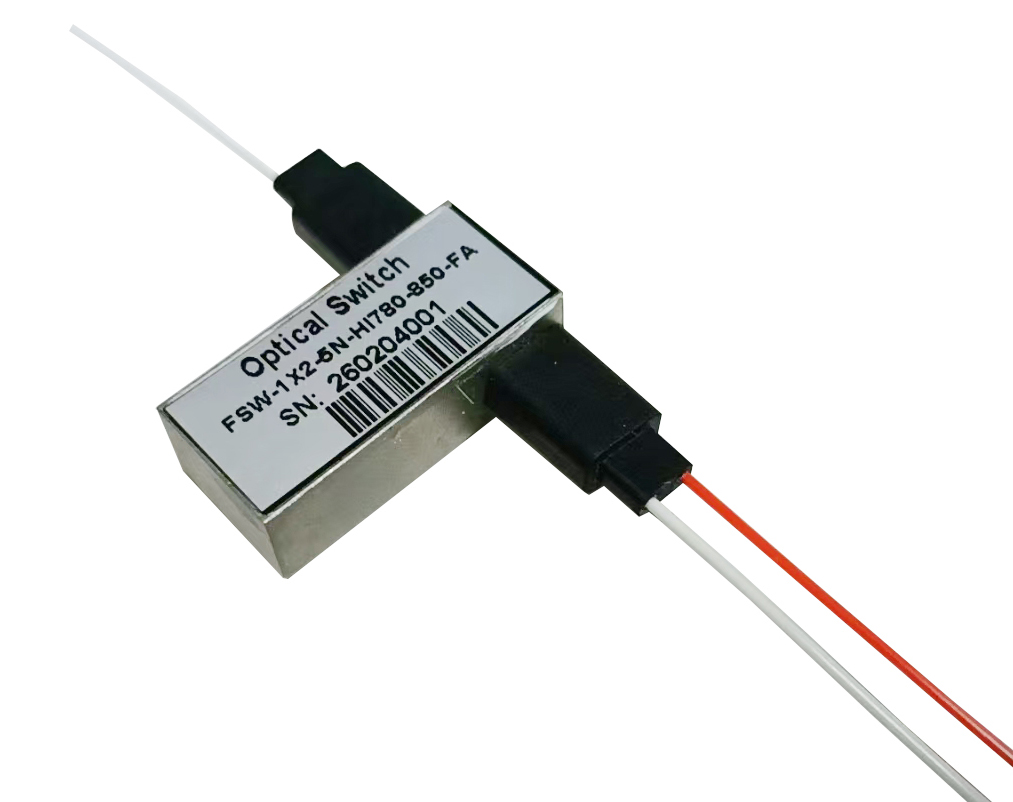
In fiber optic communication and optical testing systems, reliable optical path switching is essential. For applications that require stable switching and reduced power consumption, a 1×2 latching mechanical optical switch can be an effective solution.
Unlike non-latching switches that require continuous power to maintain a particular state, a latching optical switch is designed to retain its selected optical path after the switching drive signal is removed. This feature helps reduce holding power consumption while maintaining the selected optical connection.
How Does a Latching Optical Switch Work?
1×2 mechanical optical switch directs an input optical signal to one of two output ports. By using a mechanical switching mechanism, it changes the optical path according to the control signal.
In a latching design, a switching pulse moves the mechanism into the selected position. The mechanism then maintains that position without continuous electrical power, until another switching command changes the state.
This operating principle makes latching switches suitable for systems where the optical path needs to remain stable between switching operations.
Key Benefits of Latching Optical Switches
1. Reduced Power Consumption
Because continuous power is generally not required to hold the selected state, a latching optical switch can reduce power consumption compared with a non-latching design that requires continuous holding current.
This can be beneficial for systems with limited power budgets or applications where the switch remains in one state for extended periods.
2. Stable Optical Path Selection
The latching mechanism retains the selected switching position after the drive pulse ends. This helps maintain the intended optical path without continuously energizing the switching mechanism.
Actual switching stability and optical performance depend on the product design and operating environment.
3. Flexible Optical Path Switching
A 1×2 configuration allows one input to be switched between two output paths. It can support optical path selection, test channel switching, and the selection of primary or backup optical paths.
4. Suitable for Automated Optical Systems
With an appropriate electrical control interface, latching mechanical optical switches can be integrated into automated test equipment and fiber optic monitoring systems, enabling remote or programmed optical path selection.
Typical Applications
Fiber Optic Testing: Select different optical paths during testing to reduce the need for manual fiber reconnection.
Optical Communication Systems: Switch between designated optical paths according to system requirements.
Optical Monitoring: Select different channels or measurement paths in monitoring and measurement equipment.
Primary and Backup Path Selection: Support optical path selection in systems designed with redundant optical connections. System-level protection functions depend on the overall equipment design.
How to Choose the Right 1×2 Latching Optical Switch
Before selecting a latching mechanical optical switch, consider the following factors:
- Operating wavelength: Confirm compatibility with the wavelength range of your optical system.
- Insertion loss: Choose a model that meets your optical power budget.
- Fiber type and connector: Check single-mode or multimode fiber requirements, as well as connector type.
- Control interface: Confirm the required drive voltage, pulse characteristics, and control method.
- Switching performance: Evaluate switching time, repeatability, and reliability for your application.
- Optical power handling: Ensure that the switch supports the optical power level required by your system.
Selecting a switch based on actual system requirements helps ensure compatibility and reliable operation.
Conclusion
A 1×2 latching mechanical optical switch offers an effective way to select between two optical paths while reducing the need for continuous holding power. Its ability to retain the selected position after switching makes it useful for fiber optic testing, optical monitoring, and other applications requiring stable optical path selection.
Looking for a 1×2 latching mechanical optical switch for your application? Contact Xionghua Photoelectric to discuss your wavelength, insertion loss, fiber type, control requirements, and customization needs.
Comments are closed