


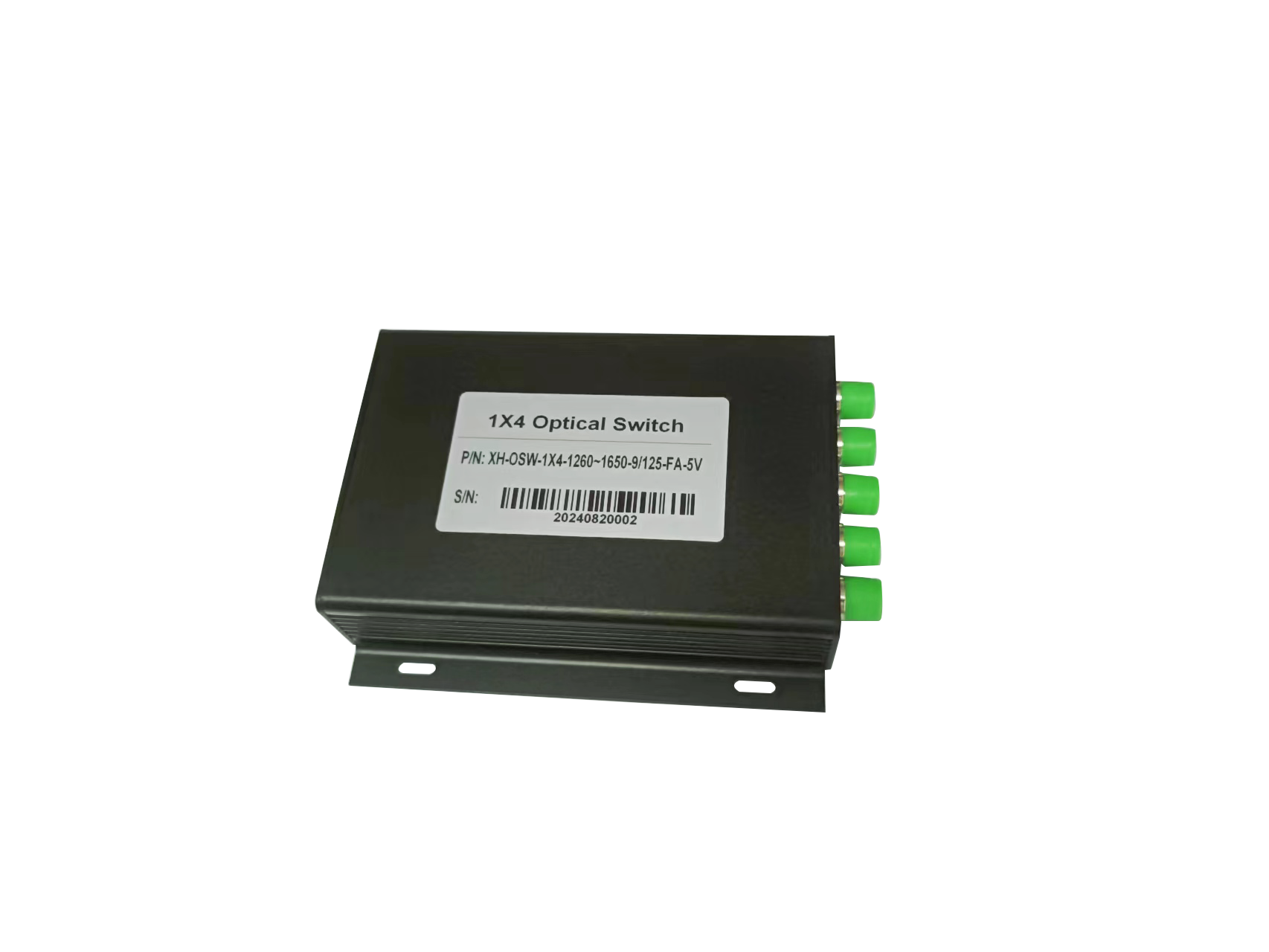
Optical Switch Specification Guide: 8 Key Parameters to Confirm Before Purchasing
When purchasing an optical switch, engineers and buyers are often presented with datasheets filled with technical specifications such as insertion loss, return loss, crosstalk, switching time, and lifetime. However, not all specifications are equally important for every application.
Many selection mistakes are not caused by product quality issues but by overlooking critical requirements during the specification stage. This guide highlights the eight key parameters that should be confirmed before selecting an optical switch.
1. Operating Wavelength Compatibility
One of the most commonly overlooked factors is operating wavelength.
Typical applications may use:
- 1310 nm communication systems
- 1550 nm long-haul transmission systems
- 850 nm testing systems
- 980 nm pump laser systems
- 1064 nm fiber laser systems
If the optical switch is not designed for the system wavelength, additional insertion loss and degraded performance may occur.
For multi-wavelength applications, a broadband optical switch is often the preferred choice.
2. Fiber Type Selection
Before purchasing, it is essential to determine the fiber type:
- Single Mode Fiber (SM)
- Multimode Fiber (MM)
- Polarization Maintaining Fiber (PM)
This is particularly important for polarization-sensitive systems.
Using a standard single-mode optical switch in a PM fiber system may significantly reduce the extinction ratio and negatively impact system performance.
3. Insertion Loss Requirements
Many users focus primarily on switching functionality while overlooking the system’s optical power budget.
For example:
If the total link budget is only 3 dB and the optical switch introduces 1.5 dB of insertion loss, half of the available budget is already consumed.
For fiber sensing systems, optical testing platforms, and long-distance communication networks, low insertion loss is often more important than switching speed.
4. Port Configuration and Future Expansion
Current requirements may only call for a:
However, future system expansion may require:
Considering future scalability during the design phase can help avoid costly upgrades and system modifications later.
5. Control Interface Compatibility
Modern optical switches are available with various control options, including:
- TTL Control
- RS232 Serial Control
- USB Control
- Ethernet (RJ45) Control
Laboratory environments may prefer USB connectivity, while industrial automation systems often require RS232 or Ethernet control.
Verifying interface compatibility in advance can reduce integration complexity and software development efforts.
6. Is Switching Speed Really Critical?
Switching time is often one of the first specifications customers ask about.
In reality, many network protection and testing applications are not significantly affected by a few milliseconds of switching time difference.
For automated testing systems, long-term stability and repeatability are frequently more important than achieving the fastest switching speed.
Rather than pursuing the lowest switching time, users should evaluate overall performance and reliability.
7. Lifetime and Reliability
Different applications have vastly different switching frequency requirements.
For example:
- Laboratory testing systems may switch thousands of times per day.
- Monitoring systems may operate continuously for years.
Applications with frequent switching should pay close attention to the switch’s mechanical lifetime specifications.
A longer operational lifetime can significantly reduce maintenance costs and improve system availability.
8. Environmental Requirements
For standard telecommunications equipment installed in controlled indoor environments, industrial-grade optical switches are typically sufficient.
However, for applications such as:
- Outdoor communication systems
- Military and defense projects
- Railway transportation systems
- Industrial automation equipment
It is essential to verify:
- Operating temperature range
- Storage temperature range
- Vibration resistance
- Shock resistance
Environmental specifications can be just as important as optical performance parameters in demanding applications.
Optical Switch Selection Checklist
Before requesting a quotation, prepare the following information:
✓ Operating wavelength
✓ Fiber type
✓ Port configuration
✓ Connector type
✓ Control interface
✓ Maximum allowable insertion loss
✓ Operating environment
✓ Optical power level
Providing these details allows suppliers to recommend the most suitable solution quickly and accurately.
Conclusion
Selecting an optical switch involves more than comparing prices or reviewing datasheets. Critical factors such as wavelength compatibility, fiber type, control interface, lifetime, environmental requirements, and insertion loss can have a significant impact on overall system performance.
By carefully evaluating these eight key parameters before purchasing, engineers and procurement professionals can reduce selection risks, improve system reliability, and ensure long-term success in telecommunications, data centers, fiber sensing systems, fiber lasers, and automated testing applications.
Comments are closed