


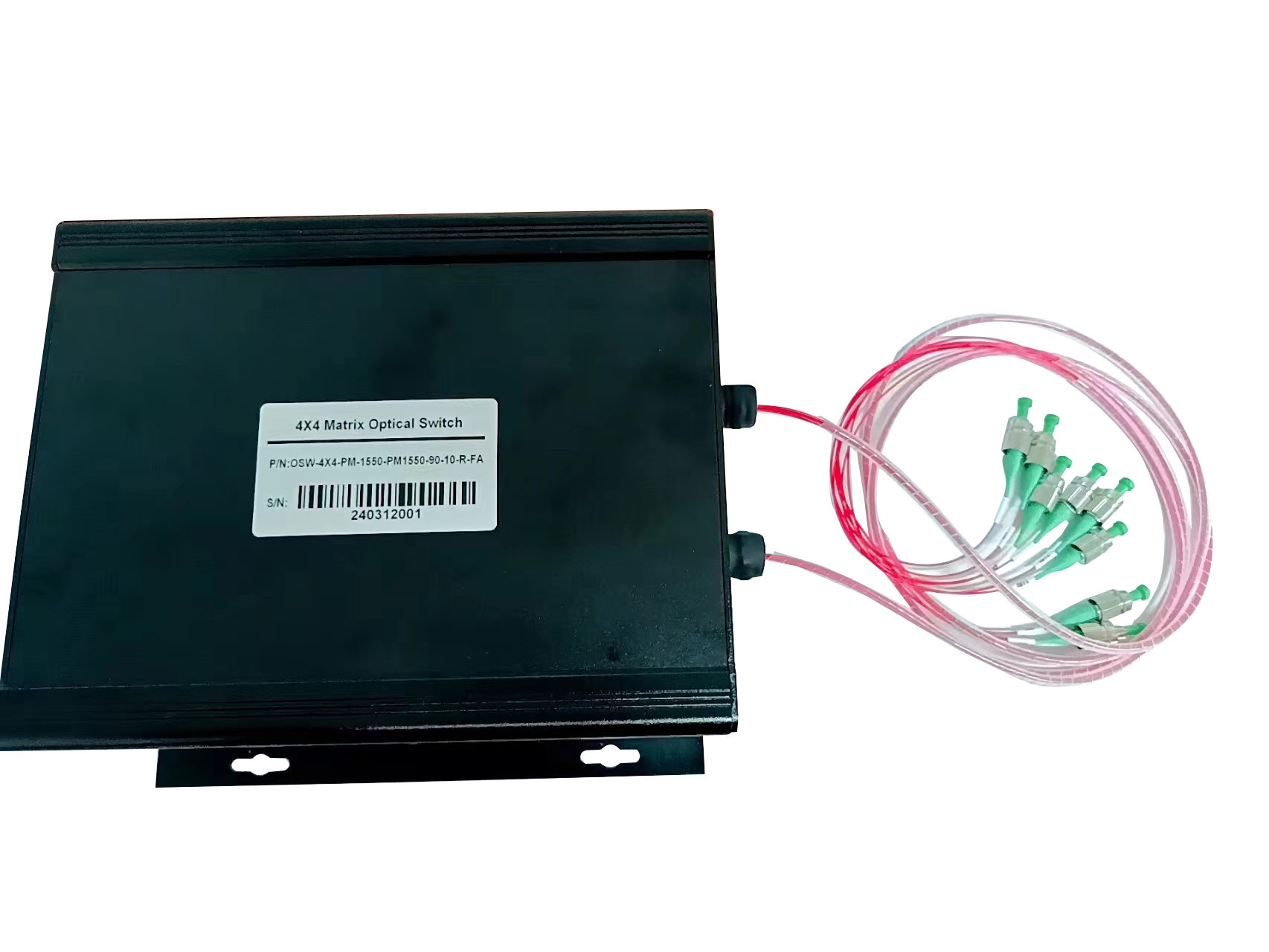
How to Choose a Polarization Maintaining Optical Switch for High-Precision Systems | Complete PM Optical Switch Buying Guide
In high-precision optical applications such as fiber optic sensing, coherent communication, fiber lasers, quantum optics, and automated test systems, maintaining polarization stability is critical to overall system performance. Even minor polarization fluctuations can introduce measurement errors, reduce signal quality, and compromise long-term reliability.
This is why choosing the right Polarization Maintaining (PM) Optical Switch is far more important than simply selecting a device with the lowest price. The right PM optical switch can significantly improve system accuracy, stability, and operational efficiency.
In this guide, we’ll explain the key factors engineers and purchasing professionals should evaluate before selecting a PM optical switch.
What Is a Polarization Maintaining Optical Switch?
A Polarization Maintaining Optical Switch is designed to route optical signals while preserving the polarization state of the transmitted light. Unlike standard optical switches, PM optical switches ensure that light remains aligned with the slow axis or fast axis of the polarization-maintaining fiber throughout the switching process.
This capability makes PM optical switches ideal for applications including:
- Fiber Optic Gyroscopes (FOG)
- Fiber Optic Sensing Systems
- PM Fiber Lasers
- Coherent Optical Communications
- Interferometric Measurement Systems
- Quantum Communication and Quantum Optics
- Automated Optical Test Equipment (ATE)
When polarization integrity is critical, a PM optical switch becomes an essential component of the optical network.
1. Extinction Ratio: The Most Important Performance Parameter
The Extinction Ratio (ER) is one of the most critical specifications for any PM optical switch.
It measures how effectively the switch maintains the desired polarization state and suppresses unwanted polarization components.
Typical Requirements
| Extinction Ratio | Recommended Application |
|---|---|
| ≥20 dB | General industrial systems |
| ≥23 dB | Fiber sensing applications |
| ≥25 dB | Precision test and measurement |
| ≥30 dB | Research and quantum optics |
Many suppliers advertise high extinction ratios, but these values are sometimes measured under ideal laboratory conditions. Always verify:
- Extinction ratio at your operating wavelength
- Temperature-dependent performance
- Long-term stability data
- Production consistency
For most industrial PM systems, an extinction ratio of ≥20 dB provides reliable performance.
2. Insertion Loss: Protecting Optical Power and Signal Quality
Insertion loss directly affects system efficiency and signal integrity.
A lower insertion loss helps:
- Increase signal-to-noise ratio (SNR)
- Reduce laser power requirements
- Improve measurement accuracy
- Extend transmission distance
Recommended Specifications
- Standard PM Optical Switch: ≤1.0 dB
- High-Performance Models: ≤0.8 dB
- Precision Research Applications: ≤0.6 dB
When comparing products, pay attention not only to typical insertion loss but also to maximum insertion loss and repeatability.
3. Wavelength Compatibility
PM optical switches are optimized for specific wavelength ranges.
Common operating wavelengths include:
- 780 nm
- 850 nm
- 980 nm
- 1064 nm
- 1310 nm
- 1550 nm
- 2000 nm
Choosing a switch designed for your exact wavelength ensures:
- Lower insertion loss
- Better extinction ratio
- Improved long-term stability
- Reliable polarization performance
A mismatch between the switch and operating wavelength can significantly degrade system performance.
4. Switching Speed
Switching speed determines how quickly the optical path can be reconfigured.
Typical Switching Times
Mechanical PM Optical Switches
- 5–15 ms
MEMS PM Optical Switches
- 1–10 ms
Applications such as automated testing, network protection switching, and real-time monitoring often require faster switching speeds and excellent repeatability.
5. Repeatability and Reliability
High-precision systems often perform millions of switching cycles during their lifetime.
Therefore, repeatability and durability are just as important as optical specifications.
Look for products offering:
- Repeatability ≤ ±0.02 dB
- Lifetime ≥ 10 million cycles
- Proven long-term stability
- High environmental reliability
Reliable switching performance minimizes maintenance costs and system downtime.
6. Fiber Axis Alignment
Polarization-maintaining fibers contain two principal axes:
- Slow Axis
- Fast Axis
Improper axis alignment can completely negate the benefits of using PM components.
Before ordering, always specify:
- Slow Axis Alignment
- Fast Axis Alignment
Or provide the exact PM fiber model used in your system.
This simple step can prevent costly integration issues later.
7. Control Interface Options
Different applications require different control methods.
Common control interfaces include:
- TTL
- RS232
- USB
- Ethernet (RJ45)
- Front Panel Keypad
Recommended Selection
Laboratory and R&D
- USB
- RS232
Automated Manufacturing Systems
- TTL
- Ethernet
Choosing the appropriate interface simplifies system integration and improves operational efficiency.
8. Environmental Performance
Industrial and scientific environments can expose optical components to temperature fluctuations, vibration, and humidity.
Evaluate specifications such as:
- Operating temperature range
- Storage temperature range
- Vibration resistance
- Shock resistance
- Humidity tolerance
For aerospace, defense, and industrial applications, robust environmental performance is essential.
How to Choose a Reliable PM Optical Switch Manufacturer
The quality of the supplier often determines the quality of the product.
A qualified manufacturer should provide:
- Extensive experience in PM optical components
- Advanced optical testing capabilities
- Custom design support
- Stable mass-production capacity
- Strict quality control procedures
Additionally, request:
- Extinction ratio test reports
- Insertion loss data
- Reliability test reports
- Product qualification documents
A trustworthy supplier can help reduce development risks and accelerate project deployment.
Why Choose Xionghua Photoelectric PM Optical Switches?
Xionghua Photoelectric specializes in the design and manufacturing of high-performance optical switching solutions for telecommunications, fiber sensing, laser systems, and scientific research applications.
Our PM Optical Switches feature:
✓ Extinction Ratio ≥20 dB
✓ Low Insertion Loss
✓ Fast Switching Speed
✓ High Repeatability and Reliability
✓ Multiple Wavelength Options (780–2000 nm)
✓ Slow Axis or Fast Axis Alignment Available
✓ TTL, RS232, USB, and Ethernet Control Interfaces
✓ Customization Services for Specialized Applications
Whether you are developing a fiber optic sensing system, a PM fiber laser platform, or a precision optical test setup, our engineering team can help you select the optimal switching solution.
Conclusion
Selecting the right PM optical switch is critical for maintaining polarization stability, measurement accuracy, and long-term system reliability.
By carefully evaluating extinction ratio, insertion loss, wavelength compatibility, switching speed, repeatability, alignment requirements, and environmental specifications, engineers can significantly improve overall system performance and reduce operational risks.
If you are looking for a reliable PM optical switch supplier, contact Xionghua Photoelectric today to discuss your application requirements and receive professional technical support.
Comments are closed