


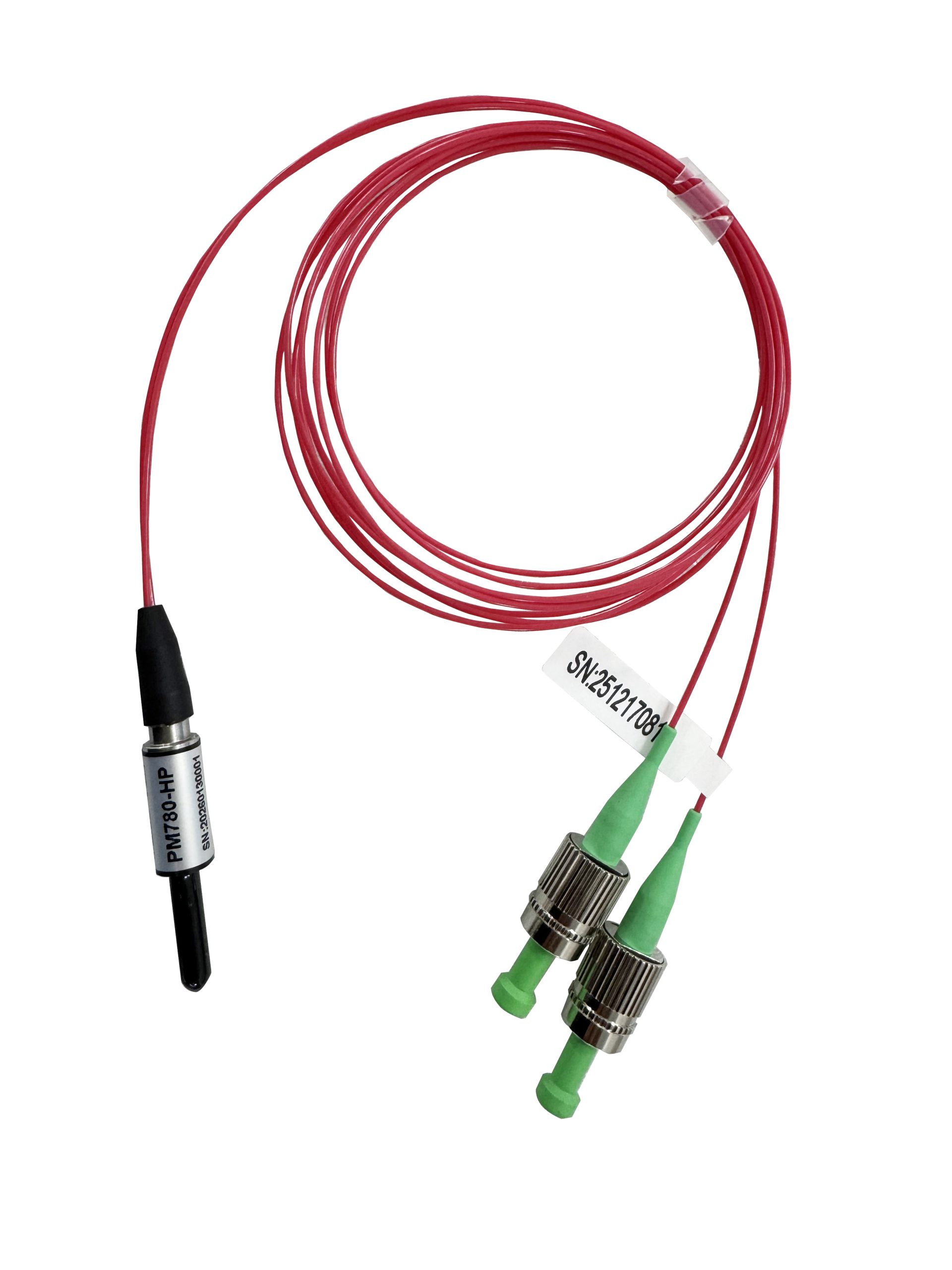
Optical Attenuators: An Important Passive Fiber Optic Component
In fiber optic communication, fiber lasers, optical sensing, and fiber optic test systems, controlling optical power is essential for stable system operation. When the optical power is too high, it may cause receiver saturation, measurement errors, or even affect the normal operation of optical components. Optical attenuators are important passive fiber optic components designed to address these challenges.
What Is an Optical Attenuator?
An optical attenuator is a passive optical device used to reduce the power of an optical signal while maintaining the required transmission characteristics.
Depending on the design, optical attenuators can reduce optical power through absorption, reflection, scattering, or other optical mechanisms.
Unlike active optical devices such as optical amplifiers, most optical attenuators do not require an external power supply. They offer a simple structure, high reliability, compact size, and easy installation, making them widely used in fiber optic systems.
For example, when the input optical power is higher than the maximum acceptable power of a receiver, an optical attenuator can be inserted into the optical path to reduce the power to an appropriate level.
Main Types of Optical Attenuators
Optical attenuators can be classified into different types according to their operating principles and applications.
1. Fixed Optical Attenuators
A Fixed Optical Attenuator provides a predetermined attenuation value, such as 1 dB, 3 dB, 5 dB, 10 dB, 15 dB, or 20 dB.
With a simple structure and stable attenuation performance, fixed optical attenuators are commonly used in:
- Fiber optic communication links
- Optical module testing
- Optical power balancing
- Fiber optic network equipment
- Laboratory optical systems
Fixed attenuators can also be customized according to fiber type, operating wavelength, and connector configuration.
2. Variable Optical Attenuators
A Variable Optical Attenuator (VOA) allows the optical power to be adjusted according to system requirements.
Compared with fixed attenuators, VOAs are more suitable for applications requiring dynamic optical power control, including automated test equipment, optical communication systems, fiber optic sensing, and laboratory instruments.
MEMS VOAs are one common solution. By using micro-electromechanical systems to control the optical path, MEMS VOAs can provide precise attenuation adjustment and fast response.
3. In-Line Optical Attenuators
In-line optical attenuators are installed directly in a fiber optic link and can be connected to other optical components through different fiber connector configurations.
This design is convenient for installation and is widely used in fiber communication systems, optical test setups, and applications where optical power needs to be adjusted quickly.
Key Performance Parameters of Optical Attenuators
Several important parameters should be considered when selecting an optical attenuator.
Attenuation Value
The attenuation value is one of the most important specifications and is normally expressed in dB.
Different systems require different attenuation levels. Therefore, the appropriate attenuation value should be selected according to the input optical power and the maximum allowable power of the receiving device.
Operating Wavelength
Optical attenuators are generally designed for specific operating wavelengths, such as 850 nm, 1310 nm, and 1550 nm.
When selecting an attenuator, make sure that its operating wavelength range is suitable for the optical system.
Insertion Loss
In addition to the specified attenuation value, an optical attenuator also introduces its own insertion loss. Low and stable insertion loss helps maintain the overall performance of the optical link.
Return Loss
For fiber optic communication and laser systems that are sensitive to optical reflections, return loss is another important parameter.
Higher return loss generally indicates lower reflected optical power, which can help reduce the impact of back reflections on the system.
Optical Power Handling
Different optical attenuators have different maximum optical power ratings.
For fiber lasers, high-power optical testing, and industrial optical systems, it is particularly important to verify the power-handling capability of the attenuator before selecting a suitable model.
Applications of Optical Attenuators
Optical attenuators are widely used in various fiber optic systems.
Fiber Optic Communication
In optical communication networks, attenuators can be used to adjust optical power between different links and prevent excessive input power from saturating the receiver.
Fiber Optic Testing and Measurement
In optical power meters, optical spectrum analyzers, and other fiber optic test equipment, attenuators can be used to adjust the input optical power so that the test equipment operates within its appropriate measurement range.
Fiber Lasers
Some fiber laser systems require precise optical power control. Depending on the system design, fixed attenuators or variable optical attenuators can be used for optical power management.
Fiber Optic Sensing
Fiber optic sensing systems often require stable optical signals. Optical attenuators can be used to adjust the transmitted optical power and optimize power distribution within the optical path.
Laboratory and Research Systems
In laboratory experiments, researchers often need to change the optical power within an optical path. Optical attenuators with different attenuation values provide a convenient way to establish the required experimental conditions.
How to Choose the Right Optical Attenuator?
Selecting an optical attenuator involves more than simply choosing the required attenuation value. The following factors should also be considered:
Operating Wavelength → Attenuation Range → Fiber Type → Connector Type → Maximum Input Power → Insertion Loss → Return Loss → Package Type
For example, in conventional fiber optic communication systems, fixed optical attenuators can be selected according to the operating wavelength, such as 1310 nm or 1550 nm.
For automated test systems that require dynamic optical power adjustment, a MEMS VOA or another type of variable optical attenuator may be more suitable.
For high-power fiber laser applications, special attention should be paid to the optical power-handling capability and long-term stability of the attenuator.
Conclusion
As an important passive fiber optic component, optical attenuators play a key role in modern fiber optic communication, optical testing, fiber laser, and fiber sensing systems.
By providing controlled optical power reduction, optical attenuators help improve the stability and reliability of optical transmission and measurement systems.
As fiber optic communication and fiber laser technologies continue to develop, optical attenuators—including fixed optical attenuators, variable optical attenuators, and MEMS VOAs—are evolving toward higher precision, lower loss, higher power handling, and more compact designs.
Comments are closed