


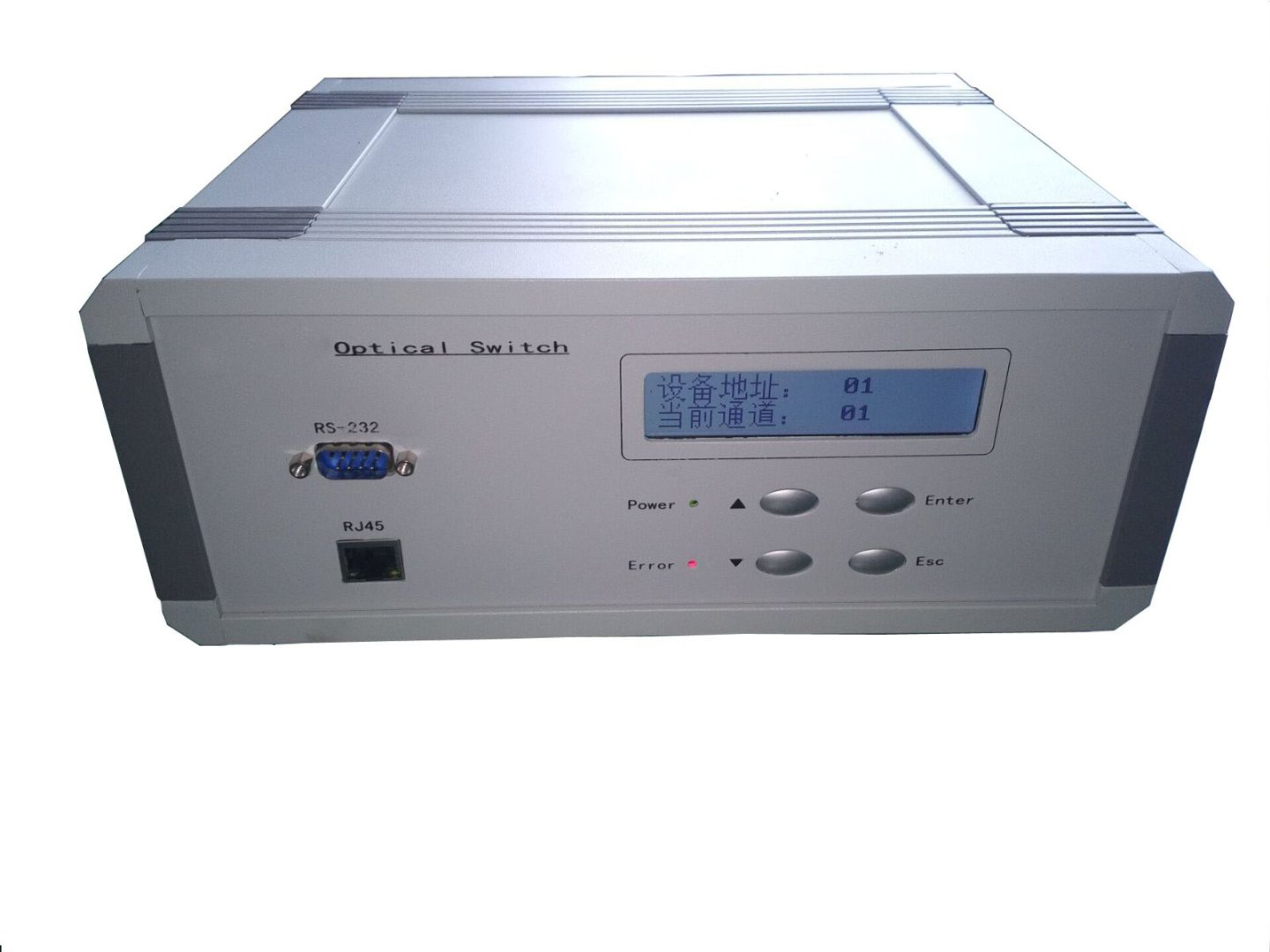
High-Stability 1×8 Benchtop Optical Switch: Replace Manual Fiber Switching and Improve Test Efficiency
Introduction
In optical testing and fiber optic device manufacturing, frequently switching between multiple optical paths can be time-consuming and labor-intensive. Manually connecting and disconnecting fiber optic cables not only reduces testing efficiency but may also introduce connector wear, inconsistent test conditions, and potential human errors.
A high-stability 1×8 benchtop optical switch provides an efficient alternative to manual fiber switching. By enabling automated selection among eight optical paths, it helps streamline test procedures, improve measurement repeatability, and reduce operator workload.
What Is a 1×8 Benchtop Optical Switch?
1×8 benchtop optical switch is an optical switching device with one common optical port and eight selectable output ports. It directs the optical signal from the common port to a selected output, allowing users to switch between multiple optical paths without repeatedly reconnecting fiber cables.
Depending on the application, the optical switch can be integrated into laboratory test systems, fiber optic production lines, and automated optical measurement platforms.
Its benchtop design provides a convenient solution for laboratory environments where reliable optical path selection and straightforward operation are essential.
Key Benefits of a High-Stability 1×8 Optical Switch
1. Replace Manual Fiber Switching
Traditional optical testing often requires operators to manually connect and disconnect fiber optic cables when testing multiple devices or channels. This process takes time and can lead to inconsistent connections.
A 1×8 optical switch enables users to select the required optical path through an electrical control interface, reducing manual intervention and simplifying repetitive testing tasks.
2. Improve Testing Efficiency
When multiple optical channels need to be measured in sequence, manually switching fibers can significantly extend the overall testing time.
With eight selectable optical paths, a 1×8 benchtop optical switch allows the test system to switch between channels without requiring repeated physical reconnection. This makes it easier to build efficient sequential testing workflows and supports automated measurements.
3. Enhance Measurement Repeatability
Repeatedly connecting and disconnecting fiber connectors may introduce variations in connection conditions and affect measurement consistency.
An optical switch provides a more consistent switching method by keeping the fiber connections in place during testing. This helps reduce variations associated with manual reconnection, although overall measurement accuracy still depends on insertion loss, connector cleanliness, calibration, and other system components.
4. Support Automated Optical Testing
A benchtop optical switch can be integrated into optical test setups through compatible control interfaces, such as RS232 or USB, depending on the model.
When connected to a computer or test controller, it can support programmable channel selection and sequential testing. This is particularly useful for applications requiring repeated measurements, multi-channel monitoring, or automated production testing.
5. Reduce Connector Wear and Operator Workload
Frequent manual fiber connections can increase connector wear and create additional maintenance work. Keeping the optical paths connected to the switch reduces the need for repeated plugging and unplugging during routine testing.
As a result, operators can spend less time managing fiber connections and more time analyzing test data and improving production efficiency.
Typical Applications of a 1×8 Benchtop Optical Switch
A high-stability 1×8 optical switch can be used in a variety of optical testing and measurement scenarios, including:
- Fiber optic component testing: Sequentially test optical devices across multiple channels.
- Optical communication laboratories: Select different fiber paths during system evaluation and performance verification.
- Production line testing: Simplify repetitive measurements and reduce manual switching operations.
- Optical sensing systems: Select different sensing paths for monitoring and evaluation.
- Research and development: Configure flexible optical test setups for experiments and prototype validation.
The appropriate optical switch should be selected according to the required wavelength range, fiber type, connector configuration, insertion loss, switching time, and control interface.
How to Choose the Right 1×8 Benchtop Optical Switch
Before purchasing a 1×8 optical switch, consider the following factors:
Wavelength range: Ensure the operating wavelength matches the optical source and device under test.
Insertion loss: Lower insertion loss helps preserve the optical power available to the measurement system.
Switching time: Choose a switching speed suitable for the required testing cycle.
Repeatability and stability: Evaluate the device’s switching repeatability and performance under the intended operating conditions.
Control interface: Confirm compatibility with your computer, test equipment, or automated test platform.
Fiber and connector type: Select the appropriate single-mode or multimode fiber and connector configuration for your application.
For specialized test systems, customized configurations may be available to meet specific optical and mechanical requirements.
Conclusion
A high-stability 1×8 benchtop optical switch is a practical solution for laboratories and manufacturers seeking to replace manual fiber switching with more efficient optical path selection.
By reducing repeated cable connections, simplifying multi-channel measurements, and supporting automated testing workflows, it can help improve testing efficiency and measurement consistency.
Xionghua Photoelectric provides optical switching solutions for fiber optic testing, optical communication, and industrial applications. Contact our team to discuss your wavelength, fiber type, connector, and control requirements for a suitable 1×8 benchtop optical switch.
Comments are closed