


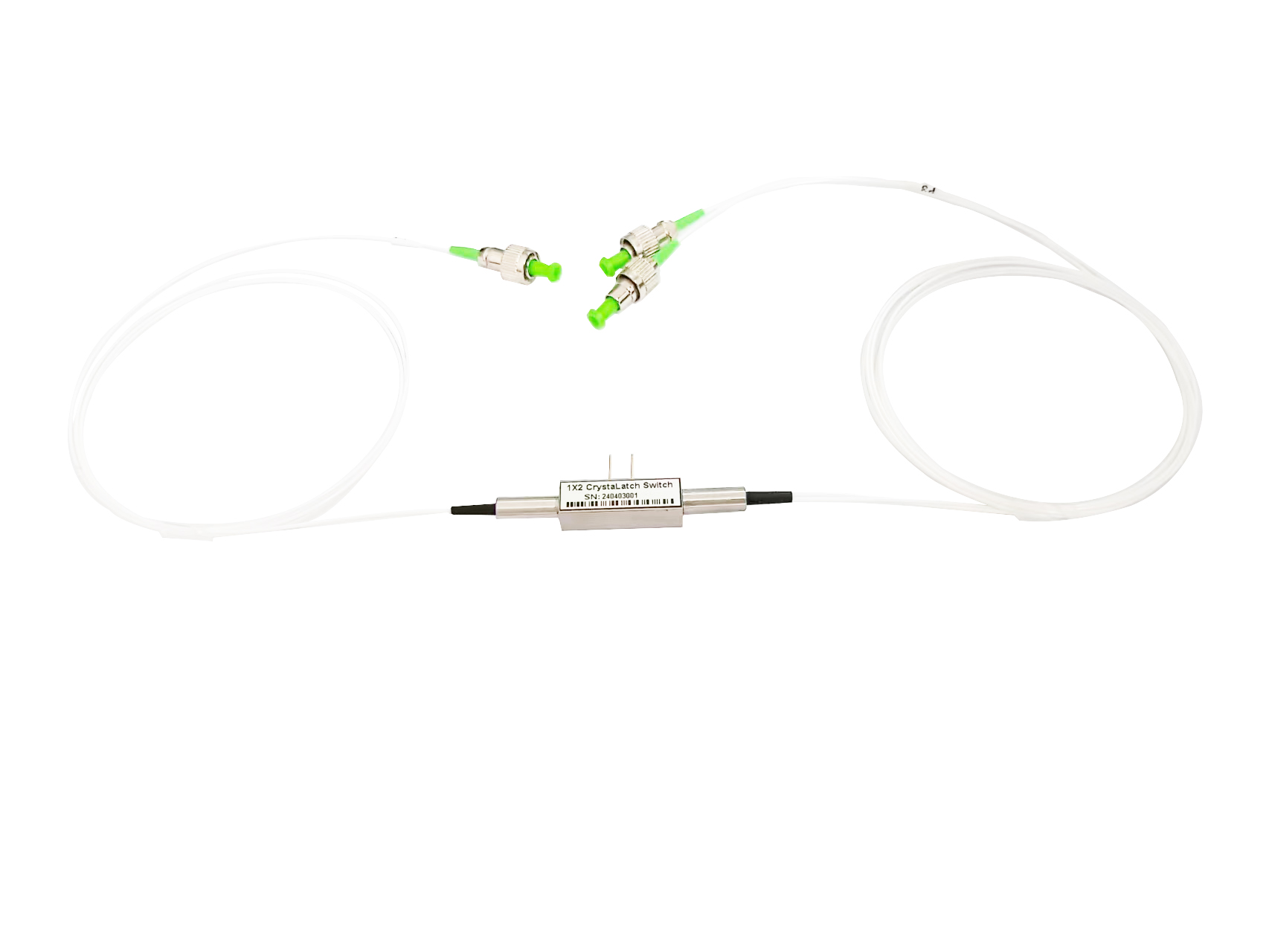
1×2 Bidirectional Magneto-Optic Switch: Key Features of PM and High-Power Versions
Introduction
In modern optical communication, fiber sensing, and laser systems, reliable optical path switching is essential for maintaining system performance and operational flexibility. A 1×2 bidirectional magneto-optic switch provides a compact solution for selecting between two optical paths while supporting signal transmission in both directions.
For applications requiring polarization stability or higher optical power handling, two important variants are available: the polarization-maintaining (PM) version and the high-power version. Each is designed to address different system requirements, from polarization-sensitive measurements to high-power laser transmission.
Understanding their operating characteristics, advantages, and application scenarios can help engineers select the right optical switch for their systems.
What Is a 1×2 Bidirectional Magneto-Optic Switch?
A 1×2 bidirectional magneto-optic switch is an optical device that switches between two optical paths and supports bidirectional signal transmission through the selected path.
Unlike conventional optical switching solutions, magneto-optic switches can use magneto-optic effects to achieve rapid switching and stable operation. Certain designs have no moving parts in the optical switching mechanism, helping reduce mechanical wear and improve long-term reliability.
Depending on the design, a latching version can maintain its selected state without continuous power consumption after switching. This feature is useful in systems where stable optical routing and reduced power consumption are important.
Typical applications include optical path selection, system monitoring, fiber optic sensing, optical testing, and laser systems.
1. Key Features of the PM 1×2 Bidirectional Magneto-Optic Switch
The polarization-maintaining version is designed for optical systems where preserving the polarization characteristics of the transmitted signal is important.
Maintaining Polarization Stability
PM optical fiber is designed to maintain the polarization orientation of light along its principal axes. When integrated into a suitable optical switch, it helps preserve the required polarization state throughout optical path switching.
This is particularly important in polarization-sensitive experiments, interferometric measurements, coherent optical systems, and fiber optic sensing applications.
Supporting Polarization-Sensitive Applications
In conventional single-mode fiber systems, polarization can change due to external disturbances and fiber characteristics. PM fiber helps reduce unwanted polarization changes when properly aligned and used within its intended operating conditions.
A PM magneto-optic switch is therefore suitable for systems that require consistent polarization behavior across different optical paths.
Reliable and Repeatable Switching
Stable switching and repeatable optical performance are important for automated testing and long-term monitoring. Depending on the device design, PM magneto-optic switches can offer fast response, stable latching operation, and high switching repeatability.
Engineers should evaluate polarization extinction ratio (PER), insertion loss, return loss, and switching time when selecting a device for polarization-sensitive applications.
Flexible Fiber and Connector Options
PM switches can be configured for different operating wavelengths, PM fiber types, fiber lengths, and connector interfaces, depending on the manufacturer’s capabilities.
For optimal polarization performance, the PM fiber axes and connector alignment must be specified correctly. The required slow-axis or fast-axis alignment should be confirmed during product selection.
2. Key Features of the High-Power 1×2 Bidirectional Magneto-Optic Switch
The high-power version is designed for applications where the optical signal carries more power than a standard switch is intended to handle.
Higher Optical Power Handling
High-power optical switches are designed to manage the thermal and optical stresses associated with increased laser power. Depending on the model, they may incorporate specialized optical materials, coatings, fiber interfaces, and thermal management considerations.
The maximum permissible optical power depends on the specific design and operating conditions. It is important to confirm the rated power for continuous-wave (CW) operation as well as any applicable peak-power or pulsed-laser limitations.
Reliable Optical Path Switching for Laser Systems
In laser systems, optical path switching can be used to select between different output paths, measurement channels, or experimental setups.
A suitable high-power magneto-optic switch can help automate these functions while reducing the need for manual fiber reconnection.
Stable Performance Under Appropriate Operating Conditions
High-power operation requires careful consideration of insertion loss, optical absorption, connector quality, fiber compatibility, and heat dissipation.
Even a small amount of optical loss can generate heat at elevated power levels. Selecting a switch with appropriate power-handling capability helps reduce the risk of thermal damage and performance degradation.
Customization for Different Laser Applications
Depending on the product platform, high-power versions may be available with different wavelength ranges, fiber types, connector options, and switching configurations.
For demanding applications, engineers should provide the operating wavelength, maximum optical power, laser operating mode, and required switching frequency before selecting a suitable device.
3. PM Version vs. High-Power Version: What Is the Difference?
Although both versions are designed to provide reliable optical switching, they address different primary requirements.
PM version: Prioritizes polarization preservation and polarization stability. It is best suited to polarization-sensitive systems where maintaining the optical signal’s polarization characteristics is essential.
High-power version: Prioritizes safe and reliable operation at elevated optical power levels. It is suitable for laser systems and optical setups that exceed the power-handling capabilities of standard switches.
These two features are not necessarily mutually exclusive. Depending on the manufacturer’s product range, a switch may combine polarization-maintaining fiber with high-power handling capabilities.
When both polarization stability and high optical power are required, engineers should specifically request a PM high-power bidirectional model rather than assume that a standard PM or high-power version meets both requirements.
4. Typical Applications
Fiber Optic Sensing
PM bidirectional switches can support polarization-sensitive sensing configurations, interferometric systems, and automated selection between optical paths.
Optical Communication and Network Testing
Bidirectional switching enables flexible routing during optical link testing, system monitoring, and laboratory evaluation. The appropriate wavelength range and optical loss must be verified for the intended communication system.
High-Power Fiber Laser Systems
High-power switches can support optical path selection and automated laser testing where the transmitted optical power exceeds the rating of standard switching devices.
Research Laboratories and Optical Experiments
Both PM and high-power variants can support automated experimental setups. PM versions are useful for polarization-dependent experiments, while high-power versions are appropriate for higher-power laser arrangements.
5. How to Choose the Right 1×2 Bidirectional Magneto-Optic Switch
Before placing an order, consider the following factors:
- Operating wavelength: Confirm that the switch supports the required wavelength or wavelength band.
- Optical power: Specify the maximum power and whether the laser operates in CW or pulsed mode.
- Polarization requirements: Determine whether standard single-mode fiber is sufficient or PM fiber is necessary.
- Switching performance: Check switching time, repeatability, and latching behavior against the system requirements.
- Optical performance: Evaluate insertion loss, return loss, crosstalk, and polarization-related performance where applicable.
- Fiber and connectors: Confirm the fiber type, fiber length, connector interface, and PM axis alignment.
- Control interface: Verify the required drive method, electrical control signals, and compatibility with the existing system.
A clear specification at the inquiry stage helps the manufacturer identify a suitable configuration and avoid compatibility issues during integration.
Conclusion
The 1×2 bidirectional magneto-optic switch is a useful solution for optical systems requiring flexible path selection and reliable switching.
The PM version focuses on maintaining polarization characteristics for polarization-sensitive applications, while the high-power version is designed to handle higher optical power under specified operating conditions. For systems requiring both capabilities, a customized PM high-power configuration may be worth evaluating.
Choosing the right version depends on the actual optical power, wavelength, polarization requirements, switching performance, and system interface.
Looking for a 1×2 bidirectional magneto-optic switch for your application?
Xionghua Photoelectric provides optical switching solutions for optical communication, fiber sensing, laser systems, and optical testing. Contact our team to discuss your wavelength, fiber type, polarization requirements, optical power, and customization needs.
Comments are closed