


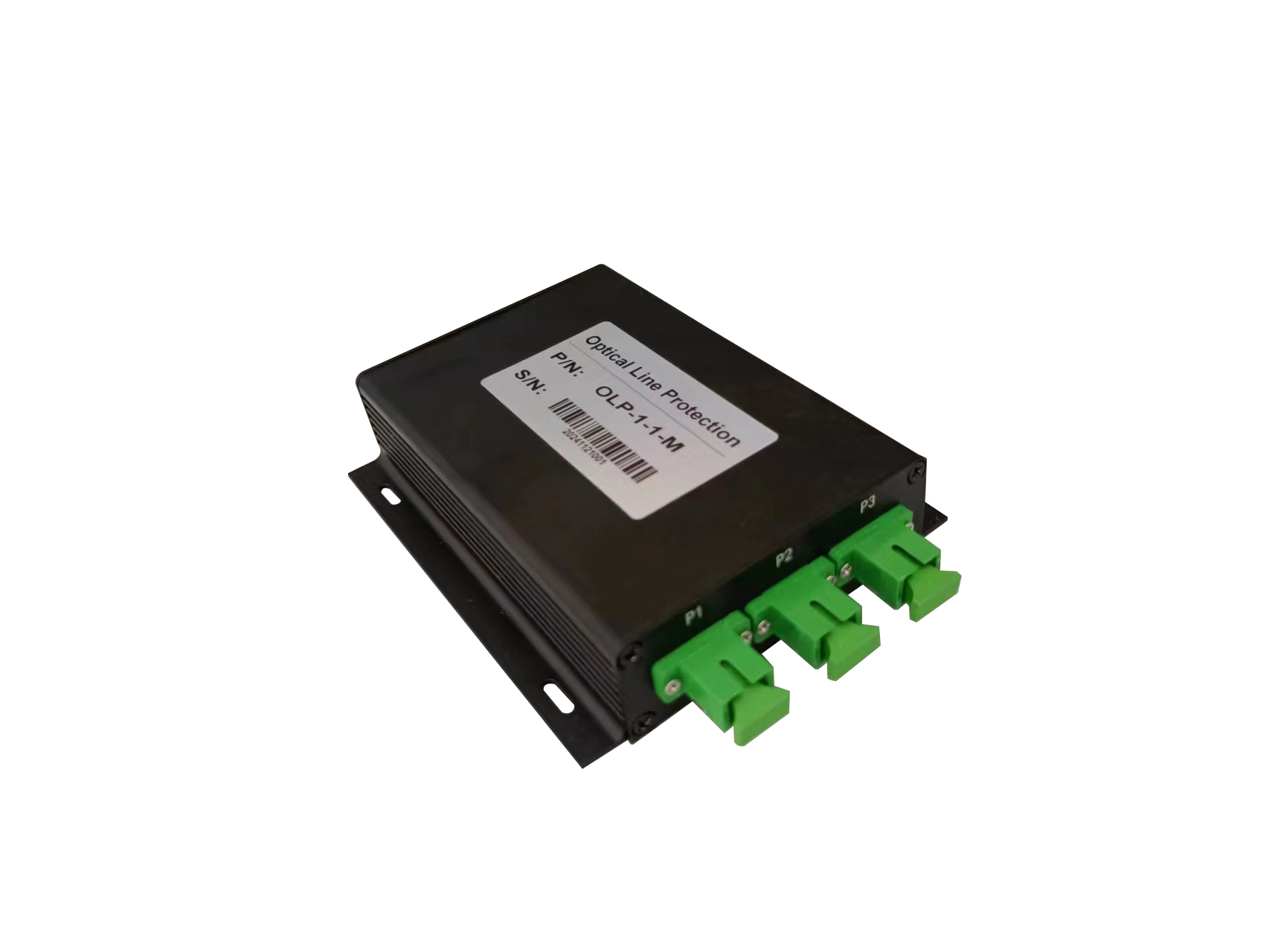
Can Your Optical Network Survive a Fiber Cut? How OLP Protects Critical Fiber Links
In modern telecommunications and data networks, fiber optic links carry massive amounts of data every second. However, even a highly reliable fiber network can be affected by unexpected fiber cuts, equipment failures, or other physical damage.
For critical communication links, a single fiber failure can result in service interruption, data loss, and significant operational costs.
So, how can an optical network remain connected when the primary fiber link fails?
An Optical Line Protection (OLP) system provides an effective solution by automatically switching traffic from the primary optical path to a backup path when a failure is detected.
What Is Optical Line Protection (OLP)?
Optical Line Protection (OLP) is a network protection technology designed to improve the reliability and availability of optical communication systems.
An OLP module typically monitors the optical power or signal condition of the primary fiber link. When the system detects a fiber cut, signal loss, or other abnormal condition, it can automatically switch the optical path to a standby fiber.
Under normal conditions:
Primary Fiber → OLP → Network
When the primary fiber fails:
Primary Fiber ✕ → OLP → Backup Fiber → Network
This automatic protection mechanism helps maintain network connectivity without requiring manual intervention.
Why Is Fiber Protection Important?
Fiber optic cables are highly reliable, but they are not immune to physical damage.
Common causes of fiber failures include:
- Accidental cable cuts during construction
- Cable damage caused by excavation or road work
- Connector or equipment failures
- Natural disasters
- Aging or physical degradation of fiber infrastructure
- Unexpected optical link failures
For ordinary networks, a temporary interruption may be acceptable. However, for critical networks, even a short service interruption can have serious consequences.
OLP provides an additional layer of protection by introducing a redundant optical path.
How Does an OLP Module Work?
The basic operating principle of an OLP system is relatively straightforward.
1. Normal Operation
Under normal conditions, the optical signal travels through the primary fiber path.
The OLP continuously monitors the optical link to ensure that the signal remains within the expected operating condition.
2. Fiber Failure Detection
If the primary fiber is cut or the optical signal drops below a predefined threshold, the OLP detects the abnormal condition.
Depending on the system configuration, the failure may be caused by:
- Loss of optical power
- Fiber break
- Equipment failure
- Abnormal optical signal conditions
3. Automatic Switching
After detecting the failure, the OLP switches the optical signal from the primary path to the backup fiber.
The network can therefore continue operating through the redundant optical path.
4. Network Recovery
Once the primary optical path is restored, the OLP can operate according to its configured switching mode and return the network to the normal path when appropriate.
This provides a more resilient architecture for critical optical links.
OLP vs. Conventional Fiber Links
A conventional optical link normally depends on a single transmission path.
If that fiber is damaged:
Fiber Failure → Communication Interruption
With OLP:
Primary Fiber Failure → Automatic Switching → Backup Fiber → Continued Connectivity
The key advantage is redundancy.
Instead of relying on a single optical path, OLP introduces a standby path that can be used when the primary link becomes unavailable.
Where Is OLP Used?
OLP is particularly valuable in applications where network availability and reliability are important.
Telecommunications
Telecom operators can use optical line protection to improve the reliability of backbone and access networks.
Data Centers
Data centers rely on high-speed optical connections for communication between network equipment and systems. An additional optical protection path can help reduce the impact of fiber failures.
Backbone Networks
Long-distance and backbone fiber networks may pass through areas where accidental cable damage is possible. Optical protection can provide an additional level of network resilience.
Critical Communication Systems
OLP can also be considered for networks supporting critical infrastructure, monitoring systems, research facilities, and other applications where communication interruption should be minimized.
What Are the Benefits of OLP?
Automatic Protection
OLP can detect optical link failures and switch to a backup path automatically, reducing the need for manual intervention.
Improved Network Reliability
A redundant optical path helps reduce the risk associated with a single fiber failure.
Faster Recovery
Automatic optical switching can restore the protected connection more quickly than manual troubleshooting and fiber rerouting.
Reduced Downtime
By providing an alternative optical path, OLP can help minimize service interruption caused by fiber failures.
Flexible Network Design
OLP can be integrated into different optical network architectures and customized according to specific system requirements.
How to Choose the Right OLP Module?
Different optical networks have different requirements, so several parameters should be considered when selecting an OLP module.
1. Operating Wavelength
Make sure the OLP supports the wavelength used by your optical system, such as 1310 nm, 1490 nm, 1550 nm, or other required wavelength ranges.
2. Optical Power
The OLP should be capable of handling the optical power level used in the application without affecting system performance.
3. Switching Time
For critical networks, switching speed is an important consideration. A faster switching time can help reduce the duration of service interruption.
4. Optical Performance
Important specifications may include:
- Insertion Loss
- Return Loss
- Polarization Dependent Loss (PDL)
- Crosstalk
- Switching reliability
5. Fiber Type
Depending on the application, the OLP may need to support single-mode, multimode, or other specialized fiber configurations.
6. Control and Monitoring
For network management applications, remote control, status monitoring, alarm interfaces, or other communication interfaces may be required.
OLP Is More Than an Optical Switch
Although an OLP system uses optical switching technology, its purpose is different from a general-purpose optical switch.
A conventional optical switch is often used to select or route different optical paths for testing, monitoring, or signal switching.
OLP, on the other hand, is primarily designed for network protection and redundancy.
Its key objective is simple:
Keep the critical optical link connected when the primary path fails.
Conclusion
Fiber optic networks provide high-speed and reliable communication, but no physical fiber infrastructure is completely immune to failure.
A fiber cut can happen unexpectedly, and a single damaged cable can potentially interrupt an important communication link.
Optical Line Protection (OLP) provides a practical way to improve network resilience by monitoring the primary optical path and automatically switching to a backup fiber when a failure is detected.
For telecom networks, data centers, backbone systems, and other critical optical communication applications, adding a redundant optical path can provide an important layer of protection.
If your network requires automatic optical line protection, choosing the right OLP configuration is essential.
Comments are closed