


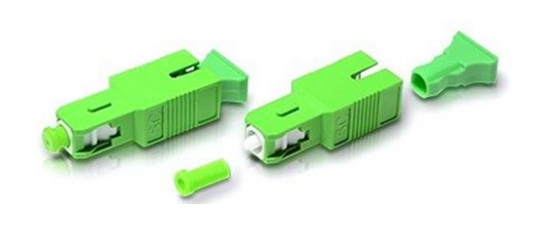
FBG Reflector
Description
FBG reflector production is based on FBG with wide bandwidth and low insertion loss. The working principle is that when the optical measurement system generates a certain range of wavelength to the optical network which can through the FBG, the FBG reflectors its own intrinsic reflection wavelength (1645-1655nm). If the measurement system can detect the reflection wavelength, it is proved that the optical fiber connection is normal.
Characteristics
- High stability and reliability
- Remote real-time detection
- Low insertion loss
Optical parameter
| Parameters | Unit | Min. | Typ. | Max. | Remark | |
| 1 | Pass band | nm | 1260-1625 | |||
| 2 | Reflect band | nm | 1645-1655 | |||
| 3.1 | IL(1260nm-1360nm) | dB | 1 | |||
| 3.2 | IL(1460nm-1625nm) | dB | 1.2 | |||
| 3.3 | IL(REFLECT BAND) | dB | 20 | 1650±5nm | ||
| 4.1 | RL(1260nm-1360nm) | dB | 30 | |||
| 4.2 | RL(1460nm-1625nm) | dB | 30 | |||
| 4.3 | RL(REFLECT BAND) | dB | 1.0 | 1650±5nm | ||
| 5 | PDL(1260nm-1610nm) | dB | 0.4 | Excluding 1360~1460nm | ||
| 6 | Ripple | dB | 0.6 | RL | ||
| 7 | TDL(1260nm-1610nm) | dB | 0.5 | Excluding 1360~1460nm | ||
| 8 | Max Optical Power Handling | dBm | 27 | |||
Comments are closed