


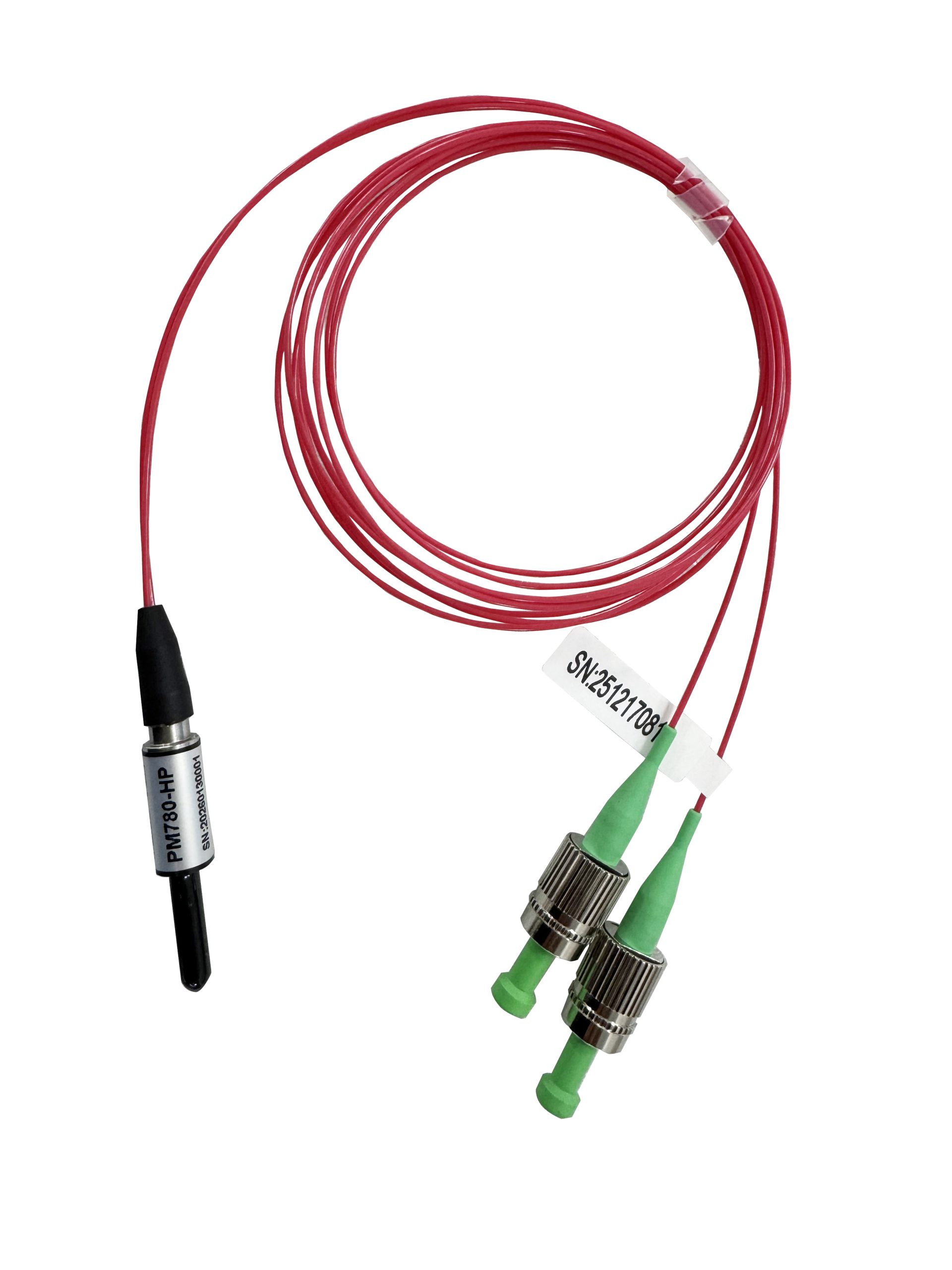
PM780 MEMS VOA: A Compact Solution for Precise Optical Power Control
In 780 nm fiber laser systems, fiber sensing, interferometry, and precision optical instruments, accurate and stable optical power control is essential. Even small changes in optical power can affect measurement accuracy, system stability, or experimental results.
The PM780 MEMS VOA (Variable Optical Attenuator) combines MEMS technology with polarization-maintaining (PM) fiber to provide a compact and precise solution for controlling optical power in 780 nm optical systems.
What Is a PM780 MEMS VOA?
A PM780 MEMS VOA is a variable optical attenuator designed for optical power adjustment around the 780 nm wavelength range.
Unlike a fixed optical attenuator, which provides only a predefined attenuation value, a VOA allows the attenuation level to be adjusted according to system requirements.
The key terms can be understood as:
- PM780 – Designed for 780 nm applications using polarization-maintaining fiber
- MEMS – Uses Micro-Electro-Mechanical Systems technology for optical attenuation control
- VOA – Variable Optical Attenuator for adjustable optical power control
This combination makes PM780 MEMS VOA particularly suitable for applications where both optical power adjustment and polarization stability are important.
How Does a PM780 MEMS VOA Work?
A MEMS VOA uses a miniature mechanical structure to control the amount of optical power transmitted through the optical path.
The basic operating concept is:
Input Optical Signal → MEMS VOA → Adjustable Attenuation → Output Optical Signal
By changing the attenuation level, the output optical power can be precisely adjusted to meet the requirements of the downstream optical system.
Unlike a fixed attenuator, a MEMS VOA provides dynamic optical power control, making it suitable for automated and precision optical systems.
Why Use a PM780 MEMS VOA for 780 nm Applications?
The 780 nm wavelength is widely used in research, fiber sensing, interferometry, laser systems, and other precision optical applications.
In these systems, controlling optical power is often more than simply reducing signal intensity. The system may also require stable polarization and compact optical components.
1. Precise Optical Power Adjustment
A PM780 MEMS VOA allows the attenuation level to be adjusted according to the required optical power.
This is useful when the input power needs to be optimized for a photodetector, sensor, optical amplifier, or measurement system.
2. Polarization-Maintaining Performance
For polarization-sensitive applications, maintaining a stable polarization state is critical.
The use of PM fiber makes PM780 MEMS VOA suitable for systems where polarization stability is an important performance requirement, such as interferometry and precision fiber sensing.
3. Compact Optical Design
MEMS technology enables the attenuation mechanism to be integrated into a compact optical package.
This makes the PM780 MEMS VOA suitable for applications where space is limited and high integration is required, including optical instruments, laboratory equipment, and fiber-optic modules.
4. Fast Optical Adjustment
MEMS-based attenuation technology can provide fast adjustment of optical power, making it suitable for applications requiring dynamic or automated power control.
5. Easy System Integration
A MEMS VOA can be integrated with an electronic control system to achieve automated optical power adjustment.
This reduces the need for manual attenuation adjustment and makes it easier to build automated optical test and measurement systems.
Typical Applications of PM780 MEMS VOA
PM780 MEMS VOA can be used in a wide range of 780 nm optical systems.
Fiber Laser Systems
In fiber laser systems, a VOA can be used to adjust the optical power delivered to downstream components.
This helps optimize operating conditions and prevent excessive optical power from reaching sensitive components.
Fiber Optic Sensing
Fiber sensing systems may require controlled optical power for stable and repeatable measurements.
A PM780 MEMS VOA can provide adjustable attenuation while maintaining the polarization characteristics required by polarization-sensitive sensing systems.
Interferometry
Interferometric systems are often sensitive to both optical power and polarization.
A PM780 MEMS VOA provides adjustable optical attenuation while using PM fiber, making it a suitable option for precision interferometric applications.
Research and Laboratory Equipment
780 nm optical systems are commonly used in scientific research and laboratory instruments.
Different experimental conditions may require different optical power levels. A variable optical attenuator allows researchers to adjust the optical power without changing the optical configuration.
Optical Testing and Measurement
VOAs are also useful in optical test systems for simulating different input power conditions.
For example, a PM780 MEMS VOA can be used to control the input power to photodetectors and other optical components during performance testing.
Key Parameters to Consider When Selecting a PM780 MEMS VOA
Selecting the right VOA requires more than simply matching the operating wavelength. The following parameters should also be considered:
Operating Wavelength
Make sure the VOA’s specified wavelength range covers the target 780 nm application.
Fiber Type
For polarization-sensitive systems, PM780 or another suitable polarization-maintaining fiber should be selected.
Attenuation Range
The required attenuation range depends on the input optical power and the desired output power.
Insertion Loss
Low insertion loss helps minimize unnecessary optical power loss in the system.
Return Loss
For sensitive laser and precision optical systems, return loss should be considered to minimize the impact of optical reflections.
Response Time
For automated power control and dynamic optical testing, response time is an important parameter.
Control Interface
Depending on the system architecture, the VOA can be configured with an appropriate electrical control method for automated operation.
Package Configuration
The package should be selected according to the available installation space and system integration requirements.
PM780 MEMS VOA vs. Fixed Optical Attenuator
A fixed optical attenuator provides a predefined attenuation value, such as 5 dB, 10 dB, or 20 dB.
A PM780 MEMS VOA, however, provides adjustable attenuation, allowing the optical power to be dynamically controlled.
| Feature | Fixed Attenuator | PM780 MEMS VOA |
|---|---|---|
| Attenuation | Fixed | Variable |
| Dynamic Adjustment | No | Yes |
| Automated Control | Limited | Suitable |
| Optical Power Control | Single attenuation level | Adjustable |
| 780 nm PM Applications | Application-dependent | Well suited |
| System Flexibility | Basic | High |
If an optical system only requires a fixed attenuation value, a fixed attenuator may be the simpler solution.
However, when precise and adjustable optical power control is required, a MEMS VOA provides significantly greater flexibility.
A Compact Component for Precision Optical Systems
As fiber lasers, optical sensing systems, scientific instruments, and precision measurement equipment continue to evolve toward higher integration, smaller form factors, and automated control, flexible optical power management is becoming increasingly important.
The PM780 MEMS VOA combines:
- 780 nm optical operation
- Polarization-maintaining fiber
- MEMS-based variable attenuation
- Compact packaging
- Adjustable optical power control
- Potential for automated system integration
This makes it a practical optical component for applications requiring precise, stable, and adjustable optical power control within a compact footprint.
Comments are closed